The new year brings change for EU member Croatia: The country becomes a member of the Eurozone and the Schengen area. The open borders are welcomed on all sides, but the new currency is also met with skepticism among citizens

The Croatian currency has long been tied to the euro
In the shop of master baker Ivana Horvat in Zagreb, all prices have long been marked in Croatian kuna and euros . The thick olive bread costs 18.48 kuna and 2.65 in the European common currency. However, Ivana is skeptical about the changeover to the euro: “All prices are rounded up. A lot of people have mortgages and interest rates will go up. We don't know what to expect from January 1st.”
Many people in Croatia have doubts about the euro
The population in Croatia seems divided: According to a Eurobarometer survey by the European Commission, 55 percent of citizens are in favor of introducing the euro. However, almost half fear that the euro will have negative consequences, and only a third of Croatians believe the country is well prepared. However, a full 81 percent of people in Croatia fear that the euro will lead to higher prices. This number had recently risen dramatically because the Corona crisis had dealt a severe blow to the Croatian economy, which is heavily dependent on tourism, and economic sentiment plummeted.

Baker Ivana Horvat from Zagreb fears a price increase
If you talk to the merchants at the market in Zagreb, you will quickly encounter such skeptical voices. “I dread the first few months of the new year. The transition period will be difficult for people,” says an elderly man. Most of the traders there are of retirement age themselves. They all have to earn something extra because the average pension in Croatia is only around 250 euros a month. Price hikes from the new currency would hit them the hardest.
“You shouldn't take our currency away from us”
“We are not happy about it! So far everything was fine – joining NATO, the EU. But they shouldn't take our currency away from us! The kuna was always our money, our grandfathers used to pay with it. I'm afraid that everything much more expensive,” complains a greengrocer. Today's Kuna was only created in 1994 with Croatia's independence and was linked to the D-Mark from the start, and later to the Euro. Because after high inflation in the former Yugoslavia in the 1980s, where the mark was considered a kind of reserve currency, confidence in the local currency at the time was initially low.
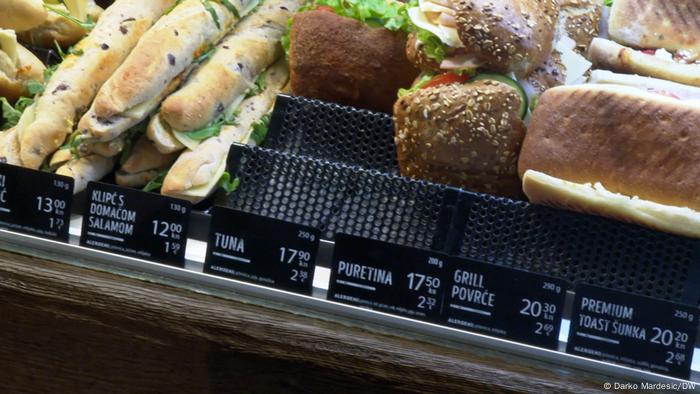
The prices in the bakery have long been given in kuna and euros
In recent years, cars, real estate and hotel accommodation have already been traded at euro prices in Croatia. Companies and private individuals hold assets in euros and two-thirds of government debt is also denominated in euros. For the government in Zagreb, accession seemed almost inevitable as soon as the country met the so-called Maastricht criteria – that is, had new debt, inflation and interest rates under control.
Croatia is lagging behind economically
It is usually seen as an advantage if a government can increase its competitiveness in the short term by devaluing an independent currency. Katharina Gnath from the Bertelsmann Foundation, on the other hand, believes that the existing close link to the euro actually nullifies this argument of the euro critics.
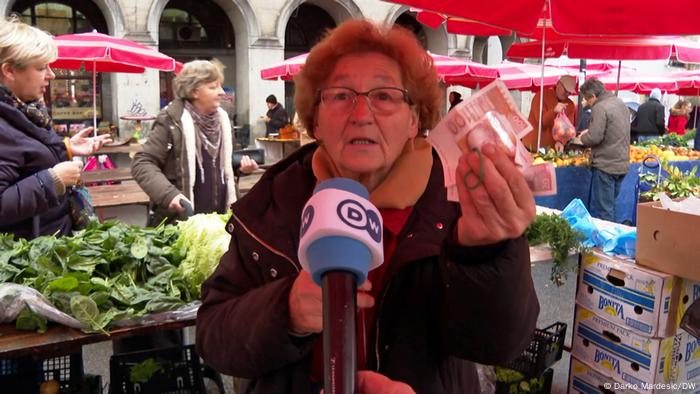
Especially older people are worried about the changeover at the Euro
Prof. Nevertheless, Ljubo Jurcic from the University of Zagreb thinks that the government is giving up the only instrument of its fiscal policy. He also believes that “big countries benefit more from the euro than small ones” and that they are dominated by the interests of the stronger.
In fact, Croatia with its four million inhabitants is economically a dwarf. The introduction of the euro has to be looked at from two sides, says the economist – from the perspective of the citizens and the national economy: “Introducing the euro in Croatia is a purely political decision based on the assumption that it will bring us closer to Europe, and that will be for ordinary citizens will be like that too. But it will bring big problems for the Croatian economy.”
Jurcic argues that Croatia would formally meet the Maastricht criteria, but not the substance: “The real condition for admission is that we should have about the same level of economic development as the EU average.” But Croatia is  ; currently only a third of the average.
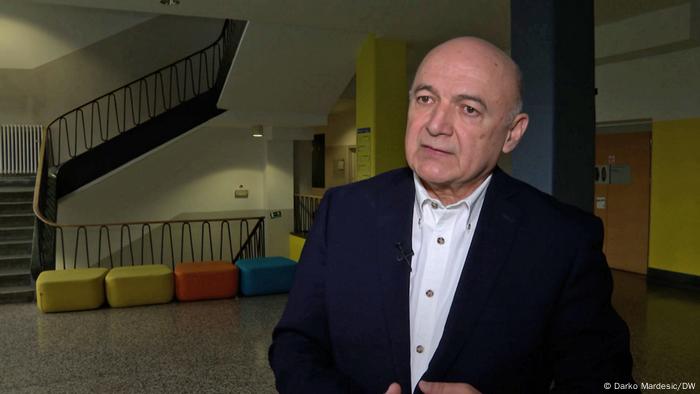
Economist Ljubo Jurcic sees Disadvantages for the Croatian economy due to the introduction of the euro
The Croatian economy is mainly based on services. It is around 20 percent dependent on tourism, according to Jurcic. He believes that a long-term reorientation is necessary to catch up with the rest of the EU. However, the country has not yet had a plan for this. A look at neighboring Slovenia shows that smarter policies have been adopted there. The prosperity there is based on production facilities for large European companies, which were brought to the country shortly after independence.
Croatia's tourism industry is enthusiastic about the euro
A drive to the Croatian coast on a rainy December day gives only a glimpse of the beauty of the Opatjia area in summer, where pine forests invite you to hike along the rocky coast with its numerous bays. Hotelier Milan Sesar keeps his family-run establishment open all year round. Even in winter he has a few guests who use his pool and sauna. They come mainly from Austria, Germany and neighboring northern Italy. The introduction of the euro is a great relief for him.
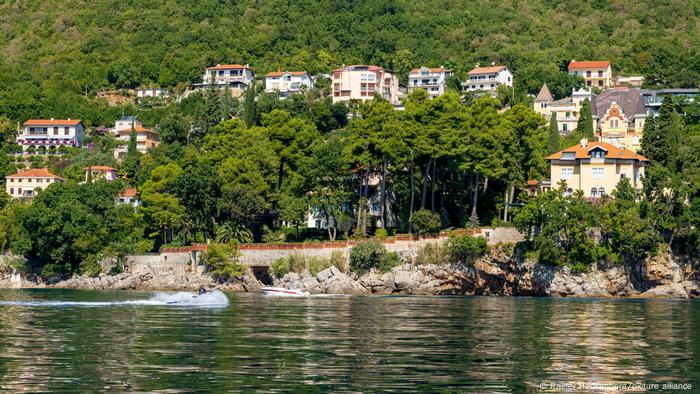
Fantastic coast in Istria near Opatjia
“We hoteliers are looking forward to the euro, our work will be much easier and we are already well prepared for it. I understand that some people are afraid of the transition. But I think there is nothing to fear, in the end it will be Money always be money”.
Two guests from Salzburg, who are looking for a male for their purebred Dalmatian bitch on the Dalmatian coast, confirm Milan Sesar's optimism: “Switching is annoying. But it will be best when the long queues at the borders stop.” As of January 1st, there will be no border controls because Croatia will become a member of the Schengen zone. If this shortened the journey from Salzburg to Opatjia by an hour, the two women would come there more often.
Croatia needs an economic reorientation
Milan Sesar believes the situation can only get better: “Croatia is so beautiful that people always come – whether it's war, economic crisis or Corona. Our guests have always come and it will be even easier in the future,” he says. “The euro and Schengen – that means a lot for Croatian tourism and yet shows that we are part of Europe. And that's a big plus for Croatia.”
The tourism industry will undoubtedly benefit, but for its continued economic future the country needs new, higher qualified and better paid jobs for young people – above all to stop the constant migration to neighboring countries.
Although the average salary in Croatia has risen in recent years, it is still in the lower third of the EU countries at around 1100 euros per month. With the euro, Croatia also needs a reorientation of its economy in order to catch up with its wealthier neighbors in the next few years.