The British investment company Bluebell Capital Partners does not leave a good hair on Blackrock, the world's largest wealth manager. Its commitment to sustainable investments is hypocritical.
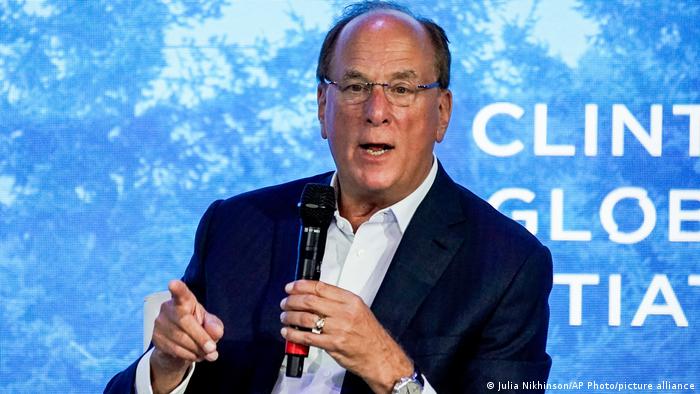
Blackroch CEO Larry Fink
It's one of the most read letters in America's executive suites: Larry Fink's Letter to CEOs. For years, the seventy-year-old has been calling on business leaders and investors to rethink. Above all, he has made it his mission to comply with criteria relating to the environment, social issues and corporate governance (ESG).
In his annual letters, the most powerful man in Blackrock, America's largest wealth manager, doesn't mince his words. “Every company and every industry will be transformed by the transition to a zero-emission world,” he writes in this year's issue. All those companies that don't adapt will fail, regardless of the industry in which they operate. “The question is: will you lead or lag behind?” A question that German company bosses also have to put up with, because Blackrock, for example, is invested in almost all companies listed in the German Stock Index (DAX).
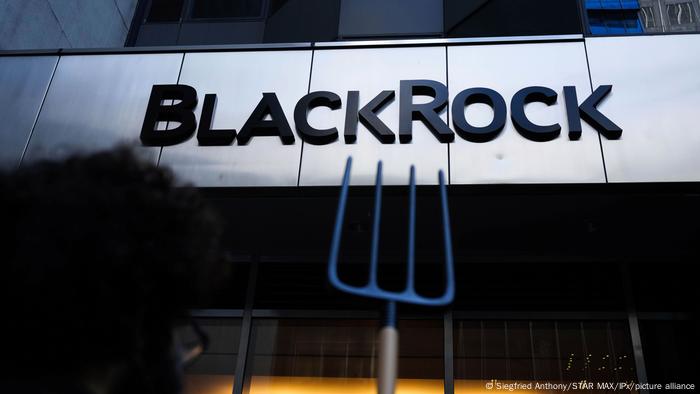
Protest by climate activists in front of Blackrock headquarters in New York
Environmental protection and human rights as investment criteria
As early as 2020, Blackrock announced that it would take a closer look at environmental protection and human rights in the future. “We believe that sustainability should be our new investment standard.” Even then, the flare-up of ecological awareness met with skepticism rather than approval. Environmentalists accused the company of a brazen image campaign.
Almost three years later, the balance sheet is even more sobering, according to Bluebell Capital Partners, a small, $250 million hedge fund from Great Britain. In a letter, the investment house accuses Blackrock of acting inconsistently with regard to environmental, social and corporate governance issues. Blackrock must therefore initiate a strategic review of its criteria and rethink the executive floor.
Bluebell hedge fund with a special strategy
The harsh criticism fits the pattern of the hedge fund, which is known for making big claims with minimal investment. For example, last year Bluebell helped oust Emmanuel Faber, CEO of food company Danone, after the investment house bought the company for just €20 million.
The commodity giant Glencore was also targeted by Bluebell
Corporations such as the consumer goods manufacturer GlaxoSmithKline, the mining company Glencore, the media group Vivendi and the luxury house Richemont were also caught in the crossfire of small investors. Recently, however, Bluebell has it in for Blackrock.
“Contradiction between promise and action”
“We criticize Blackrock for the contradiction and hypocrisy between what they say and what they do,” said Guiseppe Bivona, Bluebell's founder and chief investment strategist, in an interview with news channel CNN. Fink therefore needs to be replaced, as does director Murry Gerber, who has been on the board since 2000.
As an example, the investor cites continuing involvement in fossil fuels such as coal, which undermines the credibility of the company. Blackrock also refused to support a campaign to stop Belgian chemical company Solvay from dumping waste from its manufacturing plant in the Mediterranean.
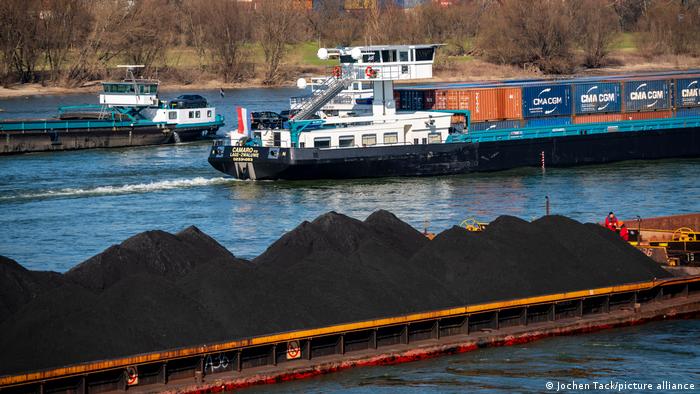
Investments in fossil fuels such as coal are met with criticism
“Do not impose any ideological demands”
With his criticism, Bivona renewed the demand that companies should not interfere in discussions about the future of energy and climate and should not impose ideological beliefs on the economy. “It shouldn't be Blackrock's job to promote energy policy or to initiate a public debate on ecological or social issues.”
The asset manager's new investment strategy is not only popular with environmentalists, but also with politicians massive headwind. Republican states in particular are increasingly bothered by the “woken” debate that Blackrock is getting rolling with his eco-politics. Some politicians accuse the company of boycotting energy stocks and prioritizing sustainability goals over profits. Many see this as a threat to the future of their local economy.
States see threats to local economies
“We are an energy state and the energy sector brings us hundreds of millions of dollars in tax revenue,” West Virginia state treasurer Riley Moore told the New York Times. “All of our jobs depend on coal and gas. It's part of our way of life here.”
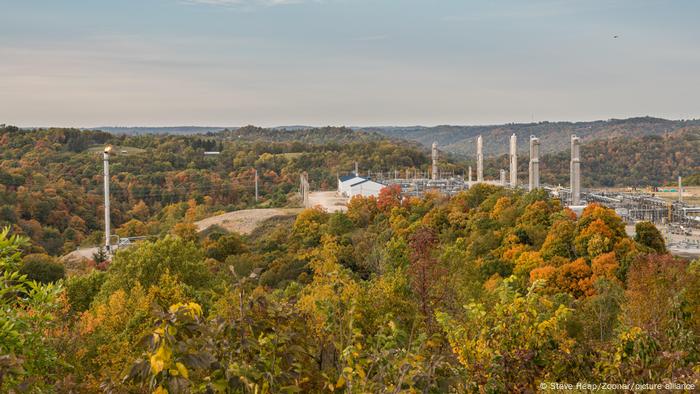
Gas – and oil field in West Virginia
The fact that Blackrock is asking companies to operate more sustainably is a threat to the existence of the country and its people. “We have to fight back,” says Moore.
As early as January 2022, West Virginia withdrew $20 million in pension funds – only a fraction of the billions that Blackrock manages in the state as a whole, but it's still a sign. Florida also announced a few days ago that it would withdraw investments in state pension funds worth around two billion dollars from Blackrock.
The state of Texas has meanwhile passed a law banning pension and investment funds in companies to invest that are boycotting fossil fuels. Similar guidelines are currently being promoted in 15 other states.
Blackrock does not live up to its own standards
Meanwhile, reports from environmentalists show that the conservatives' anger is largely unfounded. Accordingly, the asset manager is still deeply invested in “brown sectors”. Calculations by the climate associations Urgewald and Reclaim Finance show that Blackrock held shares in coal companies worth “at least $85 billion” at the end of October 2020. In addition, the self-imposed ESG criteria from the areas of environment (environmental), social (social) and responsible corporate management (governance) only apply to actively managed assets and therefore do not apply to passive funds such as ETFs, which account for three quarters of the assets managed by Blackrock make up.
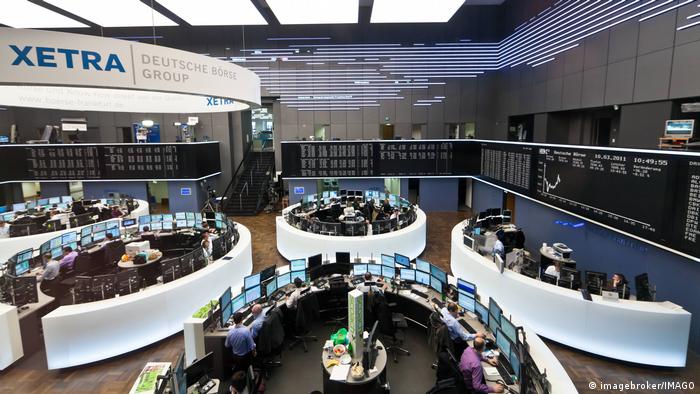
Blackrock manages many assets, most of which are invested in exchange traded funds without active management
On closer inspection, Blackrock itself also makes no secret of the fact that they don't take their own claims too seriously. “We are the world's largest investor in fossil fuel companies, and as a long-term investor in these companies, we want them to thrive and thrive,” Dalia Blass, director of external affairs, wrote to Texas regulators back in January. Blackrock has currently invested around $260 billion in fossil fuel companies, with $91 billion going into Texas companies alone. The significant holdings include climate sinners such as Exxon Mobil, ConocoPhillips and Kinder Morgan.
“We focus on sustainability not because we're environmentalists, but because we're capitalists and custodians for our customers,” Blackrock founder and CEO Larry Fink told a New York Times conference in late November. They are committed to ESG issues, but only in the interest of the stakeholders. “The pursuit of fair profits is still what drives markets, and long-term profitability is the yardstick by which markets will ultimately measure corporate success.”
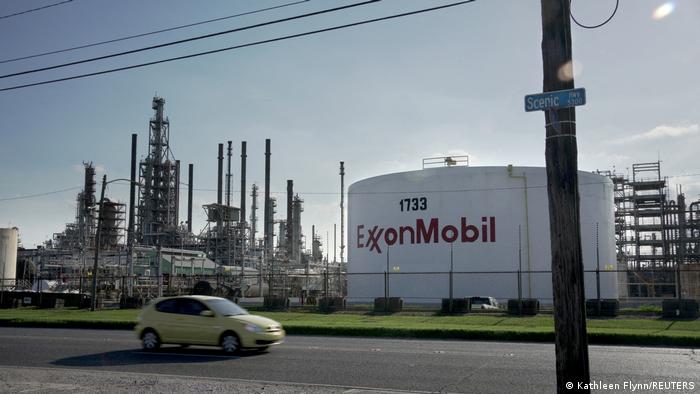
Exxonmobil Oil Refinery in Baton Rouge, Louisiana
His annual letters are also less than intended as a request rather than an inspiration. “I never wanted my letters to have any impact. I wanted them to be about current issues,” argued Fink. He writes the letters to deliver a vision, a “narrative for the next 20, 30 years” and to “give people hope and confidence”. “If we lose that long-term hope, it will be more difficult for the US to achieve differentiated growth.”
It remains to be seen whether Bivona can enforce his demands. Because even if the criticism is justified: As an investor, Bluebell has little say. With 12,000 shares, Bluebell owns only 0.01 percent of all shares in Blackrock. However, Bivona has already proven that even a small effort can make a big difference.