For weeks, members of the Serb minority in northern Kosovo have been blocking roads and border crossings to Serbia – and not always voluntarily, as Kosovo Serbs report to DW.
< img src="https://static.dw.com/image/64228687_303.jpg" />
Trucks barricade a street in northern Kosovo on December 25, 2022
His parents are at work in the not gone in the past few weeks, 25-year-old Aleksandar from the village of Zupce (Alb. Zubqe) in the north of the Republic of Kosovo told DW. Instead, they oversaw the barricades erected there in protest of the policies of the government of Europe's youngest state.
The operations are regulated by a shift plan – like normal work: “My father usually stays four or six hours at the barricade, my mother six to eight hours,” explains Aleksandar. “That's how it went last year, it's become normal for us.”
Albanians form the absolute majority of the population of Kosovo. Since the end of the Kosovo war in 1999, almost only Serbs have lived in the north of the country. Most of them earn their living in administration, in schools or medical institutions, which are paid for by the Serbian state. Institutions of the Republic of Kosovo that would actually be responsible are not present in the north of the country, and there are virtually no other jobs than those mentioned above. People like Aleksandar's parents are economically completely dependent on the Serbian government in Belgrade – on someone else State.
In the nearby community of Leposavic (Alb. Leposaviq), which is also dominated by Kosovo Serbs, people are not entirely voluntarily guarding the barricades either. “There are people there who take notes on who shows up – and who doesn't,” explains 36-year-old Stefan: “There are shifts. Women work during the day, men at night. Those who don't come are threatened with losing their job loses.” In fact, many Kosovo Serbs don't understand the meaning and purpose of the barricades, Stefan continues: “What's the point? Why are we making this mess? What is it actually about? These are the questions 90 percent of the people here ask themselves!”
Fear of plainclothes minders
Since the beginning of November 2022, around 500 Kosovo-Serb police officers resigned from the security forces of the republic, there are hardly any Kosovar security forces in the north of the country. According to their own statements, the remaining foreign police officers of the EU rule of law mission EULEX cannot fill this gap. Members of the NATO protection force KFOR monitor the situation. De facto, however, men in civilian clothes currently control the streets, which the government in the Kosovar capital Pristina describes as “criminal groups”.
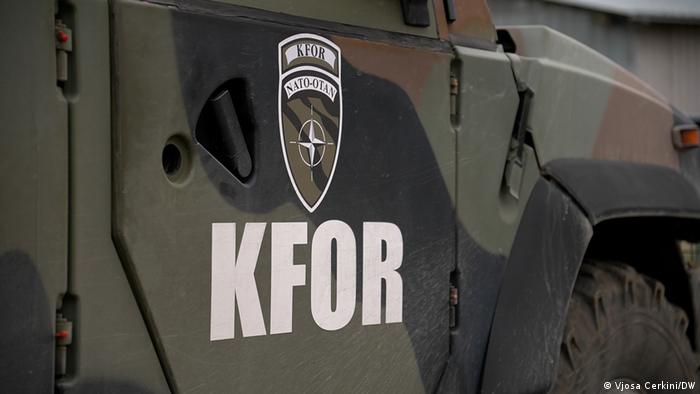
A vehicle of the NATO security force KFOR near a barricade in northern Kosovo on December 25, 2022
Many Kosovo Serbs also fear the civilian guards – because it is clear that they are closely linked to the government in Belgrade. “They monitor us. If we say something that shouldn't be said, there will be consequences. Of course we don't really know who is responsible for it – but we suffer from the fear of them,” says Aleksandar from Zupce. “Cars can be set on fire, people can be beaten – and we will never find out by whom.”
During the clashes over Pristina's demand to replace Serbian car license plates in northern Kosovo with Kosovar ones, it increased such attacks have occurred. Kosovo Serbs who did so and exchanged their number plates found a burned heap of scrap metal where they had parked their car the following morning. The perpetrators have not yet been identified.
For Stefan from Leposavic it is clear who is behind the crimes. That's why he doesn't want his last name published on the DW website: “I'm afraid of the criminal groups here in the north. I don't know who they are – but we see them every day. That's also the reason why I want to leave.”