The US border city of El Paso has declared a state of emergency. There is not enough shelter for the people crossing the border. Now a legal battle is adding to the desperation on both sides of the border.
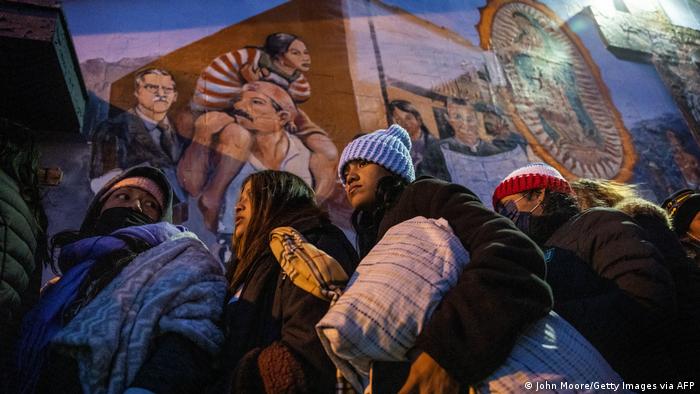
Many people try in Find a place to stay for the night at Sacred Heart Church in El Paso
Carefully, José Luis puts down the brown shoes he was able to get hold of and sits down on the sidewalk between blankets and his belongings. There are only a few things that he was able to bring across the border to the USA. He was 25 years old when he decided to leave Venezuela – his homeland.
José Luis does not want to give his real name. Instead, he willingly talks about his journey through Chile, Ecuador, Colombia, Costa Rica, Nicaragua, Panama and Mexico, finally – four years later – arriving in the USA at the age of 29. A man hands him some food, which he holds in his hand as he speaks. A curious child weaves past José Luis and the two women he is sitting with on the street in El Paso.
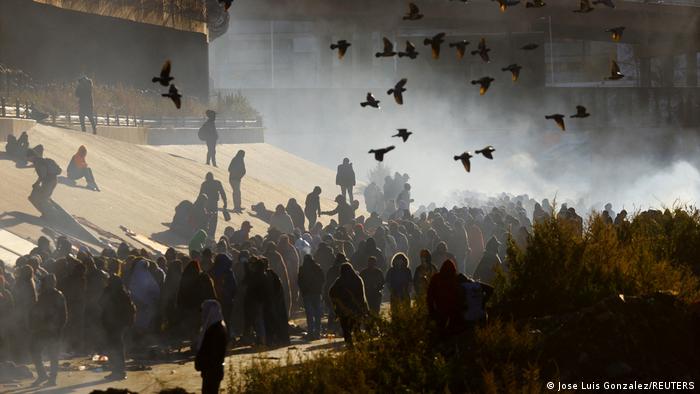
El Paso declares a state of emergency because of the high number of migrants
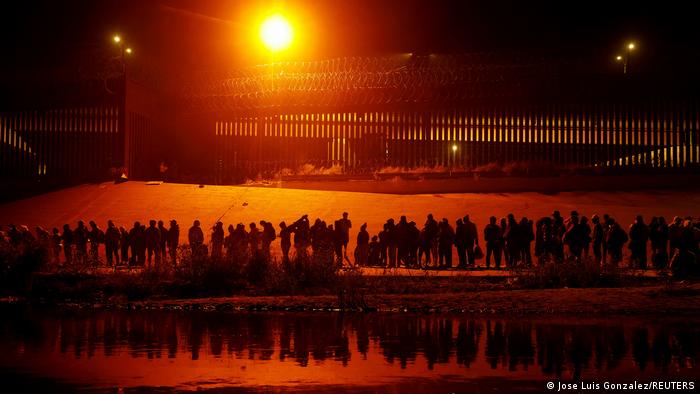
The border town where the three are staying slumbers in warm sunlight on this day between picturesque ranges of hills in the south of the US State of Texas. Just a few blocks away is the border crossing with Mexico, where thousands of people try to get into the USA.
Most of those who have made it this far onto the streets of El Paso are from Venezuela, like José Luis. But also people from Guatemala, Nicaragua and even some from Ukraine have found their way here.
Like hundreds of people who have built small camps in the city center, José Luis hopes to continue his journey to another city and for a perspective: “I am looking for a future, for a place where I can settle down, start a family and I can offer her what I didn't have: a better quality of life,” he says. With city housing already overcrowded and people forced to sleep on the streets, the mayor of El Paso declared a state of emergency over the weekend.
Left in limbo by litigation
The fact that so many people are crossing the border right now is also due to the “Title 42” regulation. This law had allowed US authorities to quickly turn migrants back at the border with reference to the corona pandemic and was due to be repealed in mid-December.
The Supreme Court had blocked this at the request of some Republican-led states and retained the regulation for the time being. Contrary to what was originally planned, it should now only fall after Christmas. Authorities from El Paso expect 6,000 people a day as soon as the regulation is lifted.

“Title 42” was issued by former President Donald Trump during the pandemic
A legal battle over Title 42 has long broken out. Since March 2020, then-President Donald Trump's controversial regulation denied more than two million migrants the right to seek asylum under American and international law.
Despair drives people to flee
“I didn't have anything,” says José Luis, looking back on his long journey to this point. He tells that he was robbed on the way, had no help, was alone, was afraid of dying. He is not alone with his story. In an interview with DW, many here say that they have crossed several countries. What drives them: The hope for a better life for themselves and their families at home.
María, who is sitting on the street here in El Paso with José Luis, is only 17 years old. Her real name is different, but she doesn't want to reveal her real name. Together with a friend and her family, she decided to leave Venezuela. “Venezuela forces everyone to look for a better way out, a better opportunity,” she says. María and her friend are sitting on black plastic bags, in which they have stowed what they still have clothing, and are wrapping themselves in a blanket.
Life as an emigrant in the USA, says José Luis, is dignified he always prefers to doing back home. “It doesn't matter if I become a street cleaner, a toilet cleaner or something else, I want to help my family in Venezuela to be better.”
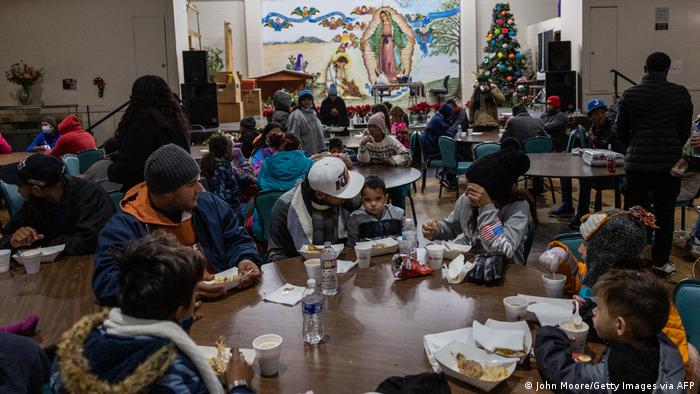
Locals from El Paso help local people who have crossed the border
Help from locals urgently needed
About every half hour a small tram rattles down the street in the middle of the city center. Occasionally cars stop, locals distribute shoes, toys for children, warm jackets, blankets for the night to the people who crowd around the helpers in a crowd.
Pastor Rafael García from the “Sacred Heart Church” also helps the people who are waiting in front of his church as best he can. Warm meals, sanitary facilities, places to sleep for a few people – he tries to make it possible.
But the situation becomes more and more dramatic the more people come. He says the US could accommodate millions of people. But the question is how they would be received: “It is very inhuman how people are treated in this bottleneck here. If you can't get them to other cities quickly, we will experience a disaster here,” warns García ;
He believes Title 42 is being used politically. “It's an excuse to keep people away.” Using the pandemic as a way to keep people from applying for asylum was questionable from the start. “It's unfair and dishonest in many ways because some people are allowed in and others aren't.”
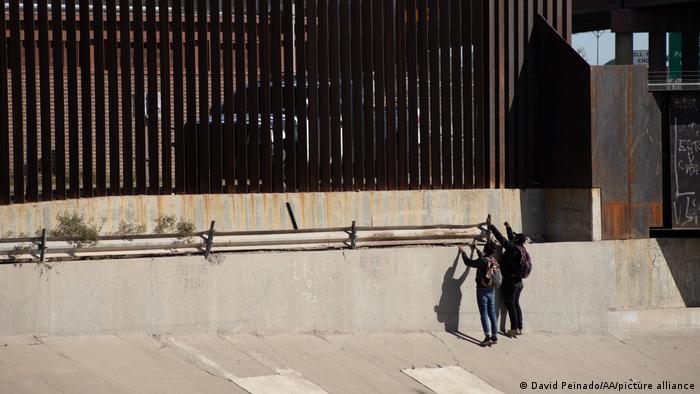
The border between Mexico and the USA still seems almost insurmountable for many people
The pastor knows that people would not undertake such a dangerous journey with children if the desperation where they came from wasn't so great. But he also knows that his church alone cannot help everyone.
That's why people depend on donations and help from local organizations like “El Pasoans fighting hunger” who drive a small ambulance through the streets and distribute food to migrants who are stuck at downtown bus stations.
“No one should go hungry, and that includes the migrants who come across borders. They're here in our city. We believe they shouldn't go hungry either,” says Lonnie Valencia, director of “El Pasoans fight hunger” of DW. “We take care of people, whether they're just arriving, already here or just passing through.”
Title 42 dispute: No change in sight
The discussion about Title 42 has now become a political tug-of-war between Democrats and Republicans in Washington. It is still unclear what immigration policy might look like after the regulation expires. Especially with a new Congress and a Republican majority in the House of Representatives, it will be difficult to find an agreement.
The US immigration system has not been overhauled in decades
Ryan C. Berg, Latin America analyst at the Center for Strategic and International Studies, does not expect the US immigration system to change fundamentally: “The government operates in a legal system that has not been updated for decades and the broken US -The immigration system has now become a political tool for both parties,” Berg told DW. “Only a few people have a genuine interest in solving the problem.”
Even For a long time, the Biden government had not shown a clear stance on Trump's Title 42. For this reason, the problem had not been solved for years. An agreement with Mexico is also a long way off. In the meantime, Washington is continuing its talks as usual, criticizes Berg.
Far behind José Luis and María, the mountains rise above El Paso in the reddish twilight. Night falls and the cold creeps slowly and persistently under your clothes. Women, children, entire families try to find a place to sleep overnight in the church premises. Many men wrap themselves in blankets and prepare for the night. It's going to be another night they have to spend outside.
-
 Migration to the USA: State of emergency in the border town of El Paso
Despair on both sides
A Haitian family walks along the El Paso border fence after crossing the Rio Grande, called the Rio Bravo in Mexico . There is now desperation on the US side of the wall as well: over the weekend, the mayor of El Paso declared a state of emergency in view of the large number of migrants crossing the border.
 Migration to the USA: State of emergency in the border town of El Paso
Fortress USA
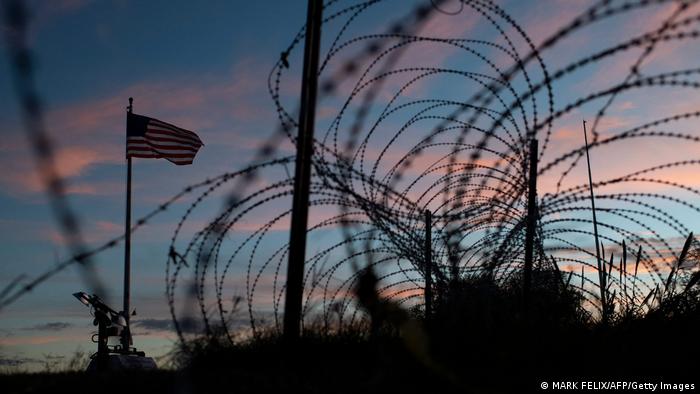
Dystopian sight in Eagle Pass, Texas: A massive barbed wire fence is designed to prevent crossing the border. In the United States, the controversial Title 42 migration regulation introduced by ex-President Donald Trump should actually be phased out. It allows authorities to reject migrants with reference to the corona pandemic and thus deny them the opportunity to apply for asylum.
-
 Migration to the USA: state of emergency in the border town of El Paso
“Right timing for the Emergency”
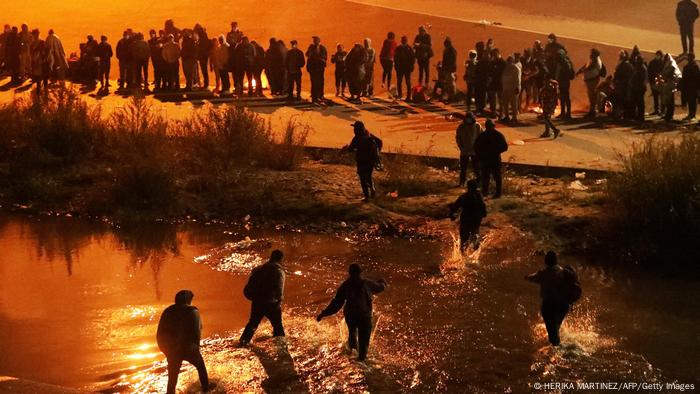
But the Supreme Court stopped the plan. Title 42 will continue for the time being. “As we see more and more asylum seekers coming into our community and as temperatures drop, we thought now was the right time to declare a state of emergency,” said El Paso Mayor Oscar Leeser, whose city sits on the Rio Grande, the border river between Mexico and the US state of Texas.
-
 Migration in the USA: State of emergency in the border town of El Paso
A little hope
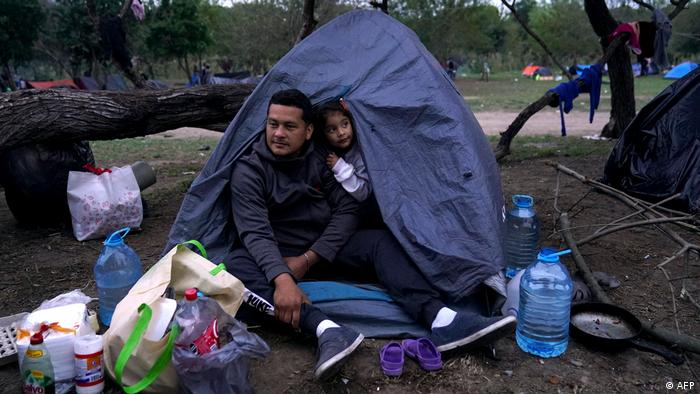
Trump's actions had been sharply criticized, and it was only in November that a court declared the regulation inadmissible. Hundreds of thousands had already been deported on their basis. Since then, many refugees have been living in tent camps along the border fence – like this Venezuelan migrant with his little daughter. He is one of thousands waiting to apply for asylum.
-
Migration to the USA: state of emergency in the border town of El Paso
Piggyback to a better life
In the US, it is expected that the number of asylum seekers will rise sharply once Title 42 is no longer in force. Mayor Leeser said he expects up to 6,000 new arrivals in El Paso per day. In the past few days, an unusually large number of people have crossed the border. However, it is currently completely unclear whether and when the regulation will actually be overturned.
-
Migration to the USA: state of emergency in the border town of El Paso
The direction is clear, but..
.. the way to the USA is dangerous: Refugees from South America, like this Venezuelan group, cross half a continent on foot. On their way lie swamps, rainforests, mountains and deserts. But criminal gangs also threaten people trying to flee. In a “caravan” like this, they hope for a little more protection.
-
 Migration to the USA: state of emergency in the border town of El Paso
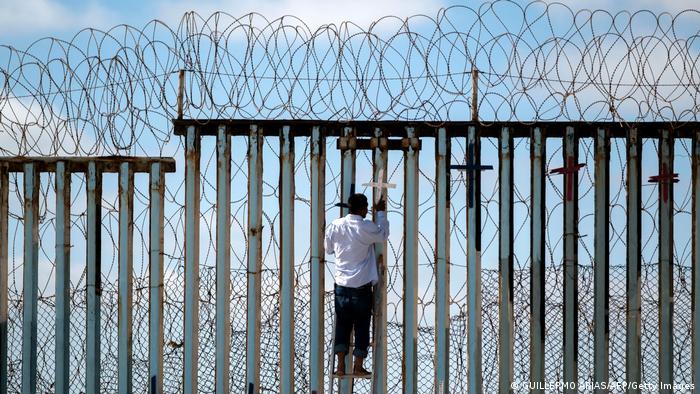
Deadly Dream
Crosses on the border fence near Tijuana commemorate those who died trying to escape. In June, 53 migrants were found dead in a truck in Texas, dying of heat exhaustion and dehydration. Since 2014, around 6,500 migrants have been reported dead or missing in Latin America and the US southern border.
-
 Migration to the USA: State of emergency in the border town of El Paso
On target
Exhausted and relieved: This family has just crossed the Rio Grande and reached El Paso . With the declaration of a state of emergency, the city now has the option to convert certain facilities into shelters. It can also request additional staff from the state of Texas to care for and house the people. The state of emergency will initially apply for seven days.