
The first German import terminal for liquefied natural gas has started operations: LNG is now being fed into the German gas network for the first time as part of a test phase. Something is also happening in Lubmin.
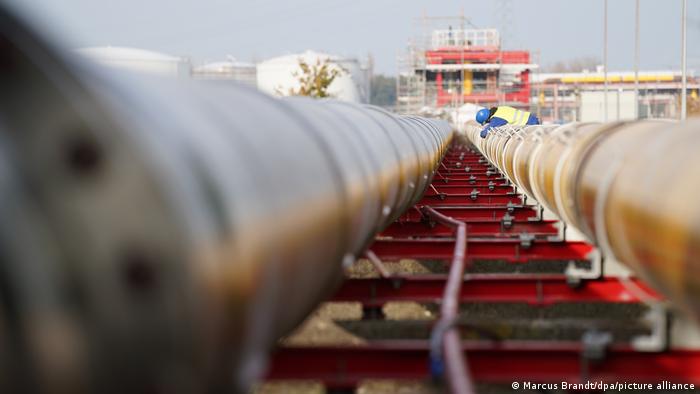

< p>One day earlier than planned, the gas importer Uniper started commissioning the first German import terminal for liquefied natural gas (LNG) in Wilhelmshaven on the German North Sea coast. According to the Düsseldorf company, on Wednesday morning shortly after 9 a.m., the first gas was fed into the newly built connection pipeline from the terminal ship Höegh Esperanza.
“The fact that the first gas is already flowing through our LNG terminal in Wilhelmshaven is further proof of the determination with which everyone involved is driving the project forward. The test phase, which should be completed at the end of February, is now beginning,” said Uniper, who is responsible for investment planning Manager Holger Kreetz of the German Press Agency. Originally, Uniper had planned to feed gas into the German gas grid for the first time on December 22nd. According to a Uniper spokesman, the fact that things are going faster now is due to the close cooperation between authorities and companies in the realization of the terminal.


December 17, 2022: Chancellor Scholz inaugurates the first German LNG terminal
First LNG ship arrives in mid-January
Last Saturday, Chancellor Olaf Scholz (SPD) opened the terminal together with other leaders of the traffic light government. Uniper operates the terminal with the support of the federal government. The special ship Höegh Esperanza reached Wilhelmshaven last Thursday fully loaded with around 165,000 cubic meters of LNG on board and moored at the newly built jetty. The ship is the technical heart of the terminal, which regasses the liquefied gas that is delivered and pumps it back to shore. According to Uniper, the amount of LNG that the ship has on board is enough to supply 50,000 to 80,000 households in Germany for a year.
According to market reports, the ship will deliver between 15 and 155 gigawatt hours of natural gas into the gas network every day during the commissioning phase. The gas will then also be used to commission the newly built, around 26-kilometer-long connecting pipeline from Wilhelmshaven to Etzel in East Frisia. But then it is also available on the market. Commercial operation of the floating terminal is planned from mid-January with a maximum capacity of around 155 gigawatt hours per day. “The next milestone is the arrival of the first LNG vessel in mid-January,” said Kreetz.
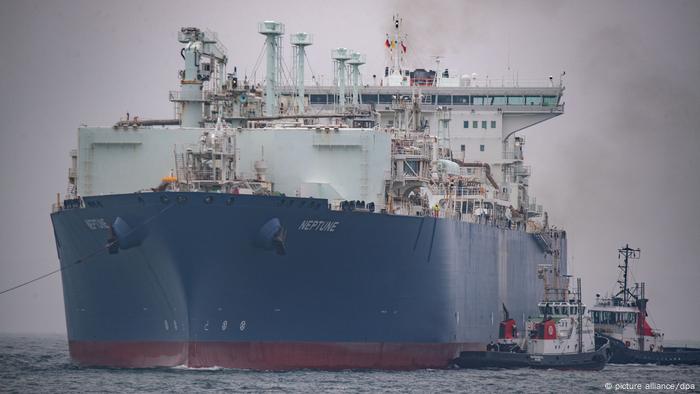
Vor Lubmin in the Baltic Sea: The Neptun – a ship for converting liquefied natural gas – moors in front of the terminal there
LNG tanker waiting to be unloaded in front of Lubmin
A tanker with the first load of liquefied natural gas for the terminal in Lubmin has arrived off Rügen in the German Baltic Sea. According to Deutsche Regas, the Seapeak Hispania loaded 140,000 cubic meters of liquefied natural gas (LNG) from Egypt. The company announced that she had reached her anchorage east of the island of Rügen in the early hours of Wednesday morning.
The operators of the terminal are now allowed to feed in gas, at least on a test basis. The responsible Schwerin Ministry of the Environment announced on Wednesday that approval for a test operation had been obtained. “The plant in Lubmin is about highly complex technical processes that have to be tested before continuous operation,” Minister Till Backhaus (SPD) was quoted as saying. He emphasized that it was not yet a final approval. “Our experts are working flat out on the immission control approval. I assume that we can expect the result of the test in January 2023,” it said serving the Baltic Sea. Smaller tankers are to transport the LNG from there through the shallow Greifswalder Bodden to the actual terminal in Lubmin. The ship was assigned an anchorage in the Prorer Wiek about seven kilometers north-east of the Sellin pier, Deutsche Regas announced.
hb/dk (dpa)