Flu, RS virus and Corona are rampant. Some children are very sick. Not only for them important medicines are missing. The President of the Medical Association has even suggested drug flea markets as a neighborhood aid.

Is the drug available? Pharmacist Fatih Kaynak checks the supplies with a colleague
A white N in a purple circle – when pharmacist Fatih Kaynak sees this symbol on his monitor, he knows that a drug is not available. “We lack antibiotics, painkillers, but also antihypertensives, cancer, stomach and heart medication,” says Kaynak while scrolling through a long list on which the white N keeps appearing on the right-hand side.
274 medicines are currently not available in the Berlin Kranich pharmacy. “It is especially difficult for us to look after children,” says Kaynak, and you can tell that this is depressing him.
The situation is getting worse and worse
Babies and young children cannot swallow pills, so liquid medicines are available for them. For fever and pain, sweet-tasting juices containing the active ingredient paracetamol or ibuprofen are used. More than ten million packs are sold in Germany every year. But now the shelves in the Kranich pharmacy are largely empty. There are also problems with penicillin and antibiotic juices.
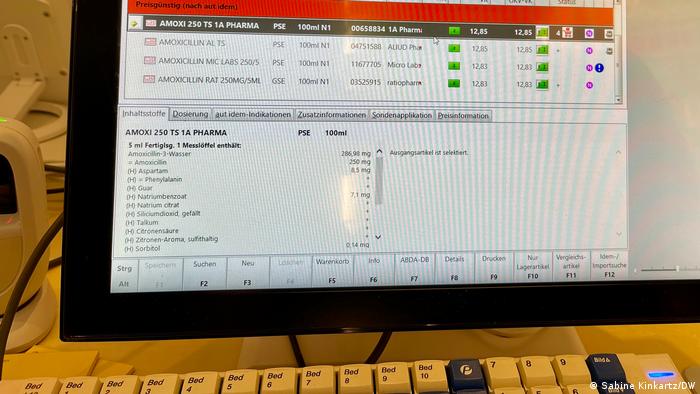
A white N in a purple circle: Medicines are being displayed as unavailable more and more
There were already bottlenecks in the summer, but the delivery problems were still sporadic, says the pharmacist. “It was often two weeks, and then there was something again.” But now the situation is really bad. Kaynak checks the range of pharmaceutical wholesalers several times an hour and waits for availability. “We used to collect items to be ordered in the shopping cart on the website. Now I send the order off as soon as I see something.”
If it's delivered, it's in rations
Which does not mean that the Kranich pharmacy will also receive the desired medicines. “If I want 50 packs of a scarce drug, I might get five,” says the pharmacist, scrolling across the screen in search of nasal spray for children. “I heard there's supposed to be something there.” In a small group of Berlin pharmacists who are friends, they constantly give each other tips when a medicine is available and also help each other out with medicines.
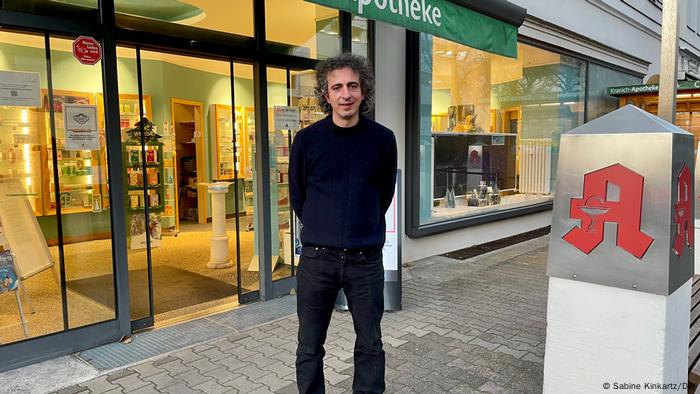
Fatih Kaynak in front of his pharmacy in Berlin
Of course, that's not enough to solve the problem to manage. Desperate parents have been speaking out on social media and neighborhood forums for months. References to alternative home remedies are in great demand. But often the only option is to go to the hospital if cold calf wraps alone do not bring down the fever and a febrile convulsion may occur.
However, due to the rampant RS virus, the children's wards are now so overloaded that even small, life-threatening patients have to wait for hours in the emergency rooms. Because clinics are full, children are being sent home again, and medicines are also becoming scarce in hospitals. Hospital pharmacies have started to mix fever syrups themselves again in emergencies.
Looking for alternatives
Pharmacies today produce between twelve and 14 million prescriptions themselves every year. Compared to the approximately 1.3 billion drug packs that were sold in 2021, this is a manageable proportion. Also because the effort is reflected in the costs.
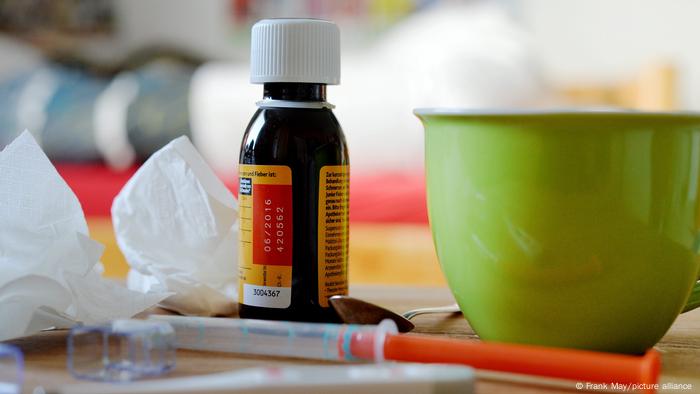
Small children are given medication with a syringe in the Administered by mouth
Pharmacies that mix fever juice for children themselves say that if raw materials, personnel costs and effort were to be taken into account, a bottle would have to cost 20 euros. The Berlin pharmacist Kaynak has already considered mixing the juices himself. “What does the price mean when a child has a high fever?” he asks.
It's about the money
It is precisely the price that has brought Germany into this precarious position. For the pharmaceutical industry, the production of certain preparations in Germany and Europe is simply not worthwhile. For example, health insurance companies pay companies 1.36 euros for a bottle of paracetamol fever juice. This amount has not increased for ten years, but the price of the active ingredient paracetamol has increased by 70 percent this year.

If the fever medication is empty and even cold compresses no longer help, the only option is often to go to the hospital
“Rapidly rising drug and production prices with frozen prices make the production of medicines such as paracetamol juices a loss-making business,” complains Andreas Burkhardt, general manager at the pharmaceutical company Teva. “No company can keep up with that in the long run.”
Orders already canceled in the summer
With its drug brand ratiopharm, Teva is the last major supplier of paracetamol juice in Germany. Twelve years ago there were eleven providers. After another manufacturer stopped production in May of this year, ratiopharm has to cover 90 percent of the demand. This is not feasible, according to the manufacturer, who canceled all orders from German pharmacies for the usual winter stocks in the summer.
As a result, “a significant increase in purchases from pharmacies was observed”, analyzes the Federal Institute for Drugs and Medical Devices. Everything that was still available was bought. “As a result, the availability of the products decreased noticeably again. At the same time, the sharp increase in purchases led to regional unequal distribution and stockpiling of the available stocks.”
“It's an indictment that medicines as simple as fever syrup are often no longer available,” said Thomas Fischbach, president of the professional association of paediatricians, in a newspaper interview. “There are too few suppliers of such agents because the fixed price regulation has led to production moving to low-wage countries such as India and China.” There are supply chain problems there, which in turn lead to supply bottlenecks.
Market narrowing and the consequences
Where it leads when important drugs are no longer available was already shown at the beginning of 2022 with the breast cancer drug tamoxifen. A drug for which there is no substitute and which is urgently needed for seriously ill patients. Here, too, there was an acute supply bottleneck because manufacturers had withdrawn from production citing cost pressure.
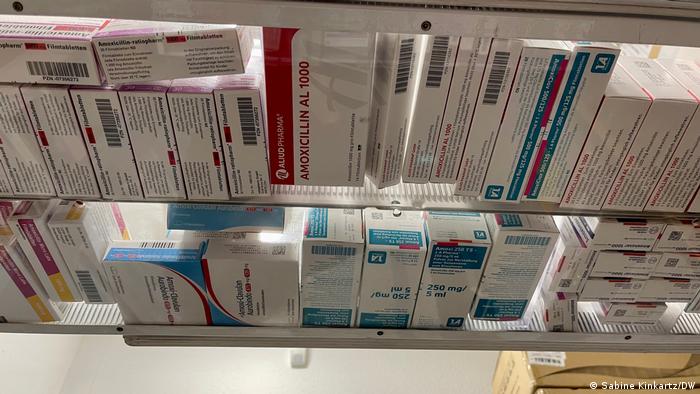
Even adults need antibiotics in an emergency
In February, the Federal Institute for Drugs and Medical Devices got involved and ordered that because of the emergency, tamoxifen-containing medicines from abroad may now also be imported and used without German approval. This has not eliminated the supply bottleneck, Tamoxifen is still one of the scarcely available drugs.
Lauterbach: Drugs should be sold more expensive
Federal Health Minister Karl Lauterbach has now reacted. “We have to take medicines for children out of the fixed amounts so that they can be sold more expensively,” he said on Tuesday in the ARD “Morgenmagazin”. He wants to instruct the health insurance companies, 50 percent more than to pay the fixed amount. Then these drugs would also be sold in Germany, Lauterbach was convinced. The Federal Republic is currently an unattractive market for medicines. With the low unit prices, it is often not worthwhile for manufacturers to produce children's medicines. “In this area we overdid it with the economy,” said Lauterbach.
Health insurance companies should also get some of the medicine from overseas and another from Europe. It must be ensured that production takes place in Europe again. “We are a rich country – but if we pay so badly for medicines for children that they are offered in other European countries, that is an intolerable situation,” said Lauterbach.
Flea markets for medicines?
In the interview, Lauterbach also rejected an unusual suggestion made by the President of the Medical Association, Klaus Reinhardt, who suggested at the weekend that anyone who is healthy should give medicines that are available at home to the sick. “We need something like flea markets for medicines in the neighborhood,” said Reinhardt in Berlin's “Tagesspiegel”. Medicines whose expiration date has already expired a few months could also be an option for such drug flea markets.
Not surprisingly, the pharmacists' association has nothing left for such neighborhood help. Thomas Benkert, President of the Federal Chamber of Pharmacists, was shocked: “Medicines belong in pharmacies, not on the flea market – certainly not expired ones.”
This article was published on 16.12. published and updated on 12/20.