
Even before the final, the 2022 World Cup is a complete success for Qatar. The Gulf state primarily pursued economic interests with the tournament. But what about World Cup finalists Argentina and France?
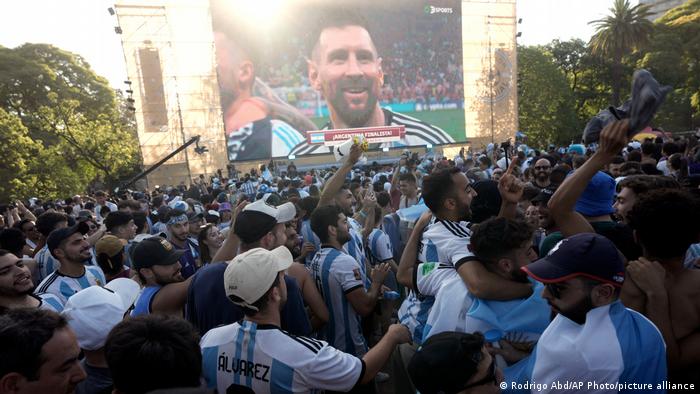

“Messi Mania” in Doha: The Argentinian national team inspires both in the country itself and in Qatar
For four weeks, the World Cup in Qatar attracted worldwide attention. The tournament in Qatar comes to an end with the grand final between Argentina and defending champions France. But the legacy of the World Cup will be felt in the Gulf Emirate for decades to come.
In the past, researchers have conducted various studies on the impact of major sporting events such as the Olympic Games or the World Cup on the economy in the host countries. The proven economic benefits and gains were weak overall and had a rather short-term effect. How winning a title at the World Cup affects the economy of the winning country has so far been less studied.
You don't need an exceptional imagination to imagine the joy and cheering scenes on the Champs Élysées in Paris or in Argentina's capital Buenos Aires in the respective case of winning the World Cup. But can the World Cup triumph also have a lasting economic effect in the country of the winner?

France wants to celebrate its successful defense of the World Cup title on the Parisian Champs-Élysées
Growth increase after World Cup victory
Five different nations have won the seven past World Cups: Brazil (1994, 2002), France (1998, 2018), Italy (2006), Spain (2010) and Germany (2014). In six of the seven cases, the country of the world champions reported a higher gross domestic product (GDP) in the World Cup year than in the two previous years.
In 1994, Brazil recorded record economic growth of 5.9 percent. The same thing happened in 2002, when Brazil's economy grew by 3.1 percent in the year of winning the title against Germany – significantly more than the year before (1.4 percent) and afterwards (1.1 percent)
For France it is in Qatar for the fourth time since 1998 in a World Cup final. At that time, the team around Zinedine Zidane and today's national coach Didier Deschamps won the title in the first final with French participation at the home World Cup.
In the same year, France's economy grew by a whopping 3.6 percent and with it significantly more than in 1997 and 1999. It was different in 2018, when France won its second World Cup title in Russia, but the country's economy grew 1.9 percent less than in the previous year (2.3 percent). < /p> 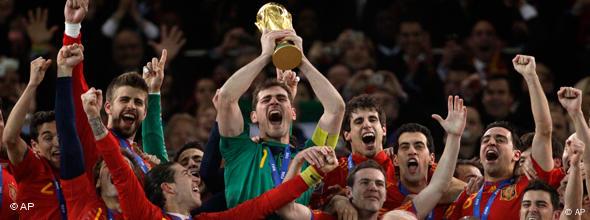

Spain's national team provided a positive impetus after winning the 2010 World Cup in South Africa
Italy's title win in 2006 was “accompanied” by economic growth of 1.8 percent and was therefore also stronger than the previous year's growth (0.8 percent) and the year after (1.5 percent). A supposed World Cup effect was also evident in Germany in 2014: the German economy grew by 2.2 percent in the year the title was won and thus significantly more strongly than in the previous year (0.4 percent) and the following year (1.5 percent ).
Even during the ongoing global economic crisis, in 2010 Spain, which was able to become world champion in South Africa for the first time, recorded economic growth of 0.2 percent. In the previous year, the Spanish economy had actually shrunk significantly (-3.8 percent) and in the following year there was no economic growth in Spain either (-1.2 percent).
“National  ;Sugar Rush”
But is winning the soccer World Cup really the reason for a growth spurt in the countries, or is it just a coincidence? During the 2014 World Cup, columnist Allen St. John wrote in US Forbes magazine. Red.]: “In the months after a world title win, there seems to be a short-term spike in productivity. Think of it as a kind of 'national sugar rush' with a short-lived burst of energy that then plummets again.”
Imagine ecstatic players still crowding bars and restaurants days and weeks after victory, or entrepreneurs trying to capitalize on the confidence and panache of their country's footballers by making reckless bets that you might not have dared before.
However, the little data that is available on this topic so far points in a different direction. A study carried out ahead of the 2022 World Cup by the University of Surrey in England found that most of the increase in gross domestic product following a World Cup victory was due to an increase in exports and not an increase in domestic consumption or investment.
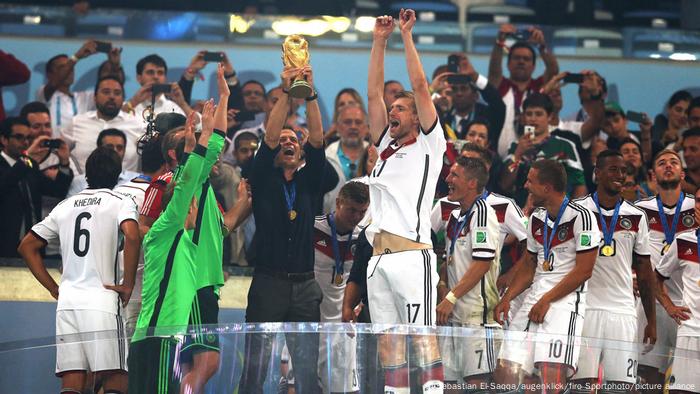
World champion in Rio: The DFB team's title win in 2014 went hand in hand with a strong financial year for Germany
“The research supports the thesis that success in one of the most respected and prestigious international sports competitions has the potential to influence the business cycle,” said the author of the study, Marco Mello. The study compared the growth data of the winning countries with those of the participating countries that did not win the tournament.
Stricken Argentina, rich Qatar
For both World Cup finalists, an economic boom in their own country through winning the title would be a blessing. Argentina in particular has been in an economic downturn and in permanent crisis mode for years. But France's economy is also facing an uncertain future and is hoping for a positive effect from the renewed World Cup title.
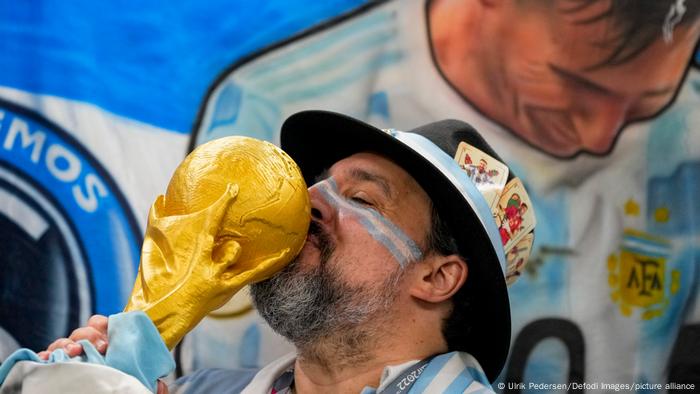
But that is nothing compared to the catastrophic situation in Argentina, which has been going through a permanent economic crisis since the collapse of the financial system in 2001. This year, superstar Lionel Messi's country is expected to see inflation soar by up to 100 percent, while Argentina's mountain of debt continues to mount.
Although Messi's Argentinian team inspires people in Qatar and at home alike and boisterous scenes of joy are practically the order of the day in Argentina, the country's economic problems are too severe for Sunday's win to have any significant impact could.
Unlike other World Cup host countries, Qatar was not primarily concerned with economic aspects, but with security policy aspects. The country on the Gulf of Arabia wants to increase its international reputation and its importance in the world through major sporting events such as FIFA's flagship product. As was heard during the World Cup, Qatar is already planning the next mega coup in sport with an application for the Olympic Games – the World Cup is said to have been just the beginning.
“It is clear that this World Cup is not about economic viability for Qatar,” Dan Plumley of Sheffield Hallam University told DW. The 2022 World Cup will probably prove to be a losing proposition economically,” explains Plumley, but Qatar is primarily aiming for non-commercial goals.
“International relations are the main motivation for hosting the tournament , and it's also about soft power as a defense and security strategy.” In Plumley's opinion, like most observers, money is “clearly not an issue” for Qatar. The country can afford a world cup and be prepared to accept the losses involved.
The text has been adapted from English.