
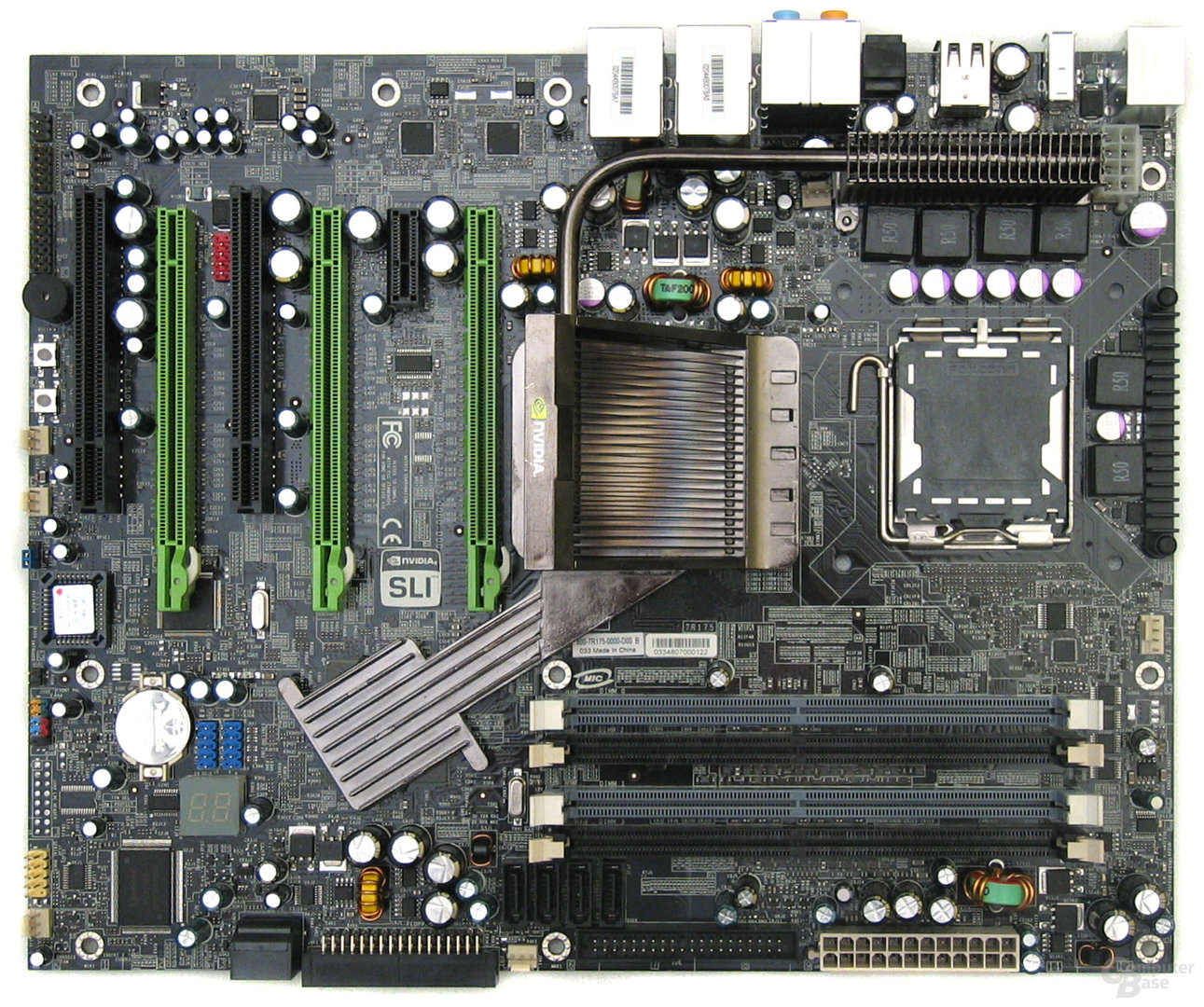
In the test 15 years ago, Nvidia's new high-end chipset nForce 780i SLI (test) stood for Intel's LGA775 socket, which inherited the nForce 680i Ultra. With few changes from its predecessor, Nvidia is taking a copy-and-paste approach to the expensive high-end platform.
Table of Contents
- nForce 200 for PCIe lanes
- The performance was sometimes up and sometimes down
- Conclusion
- And today?
-
< /ol>
nForce 200 for PCIe lanes
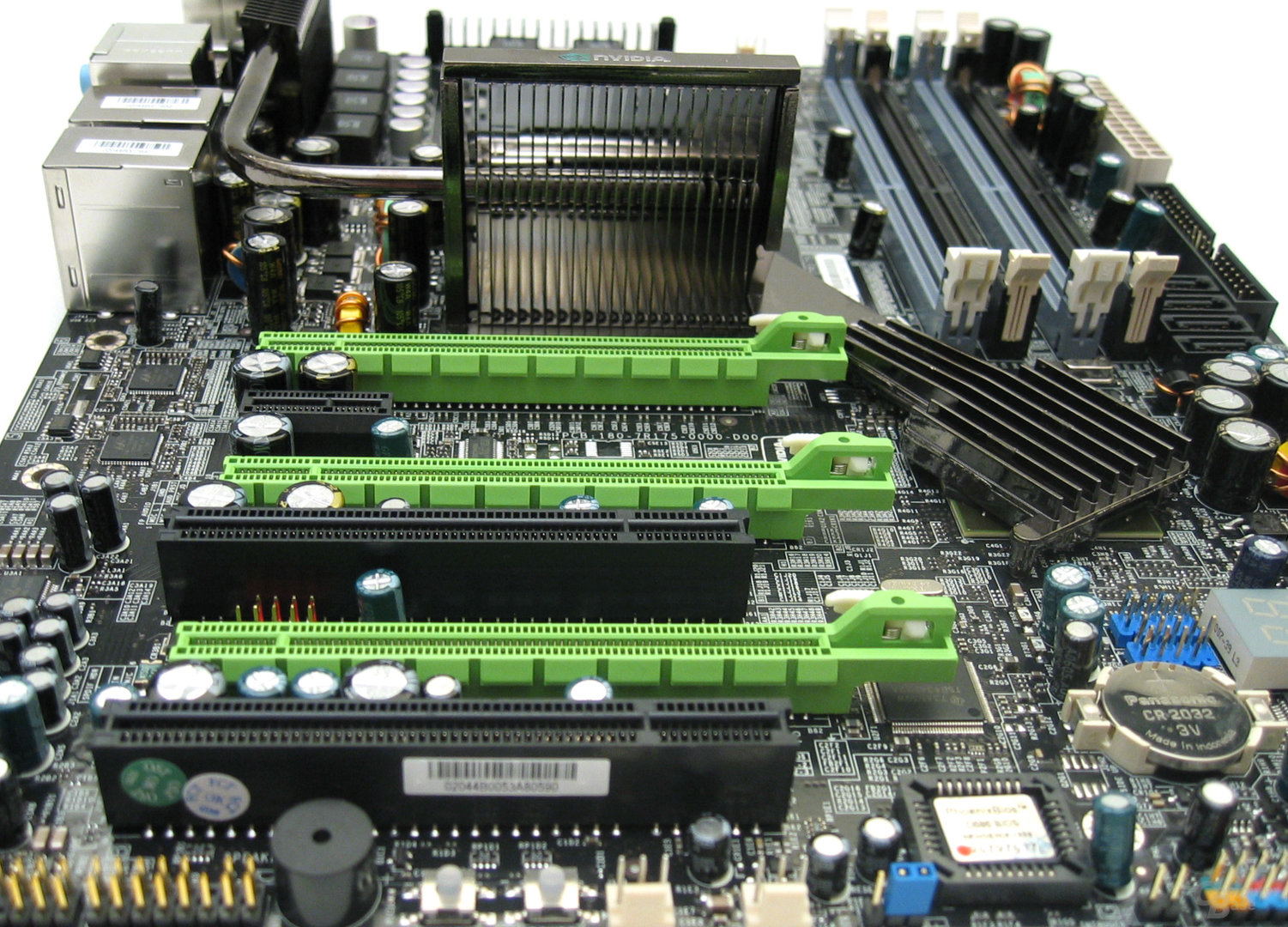
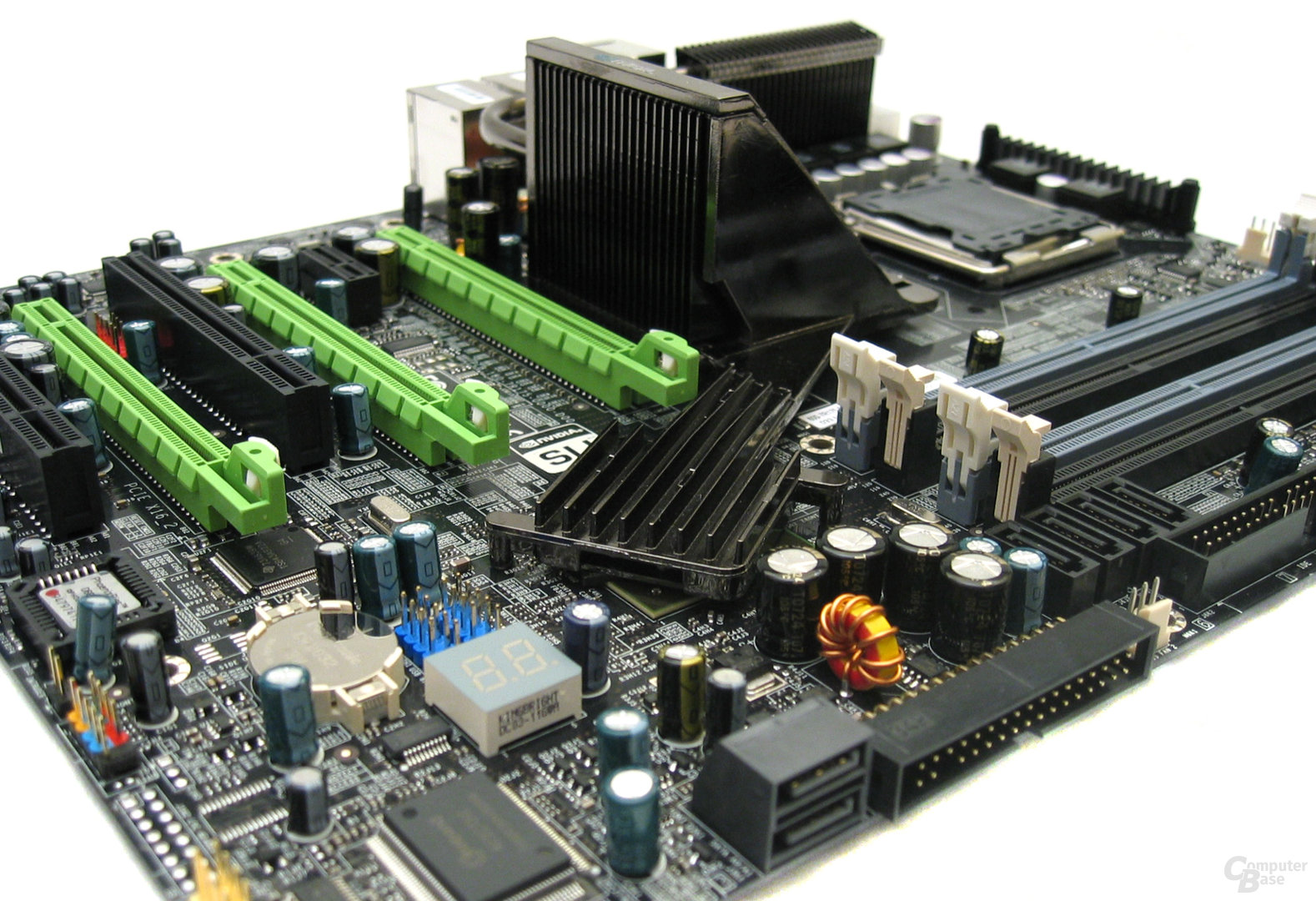
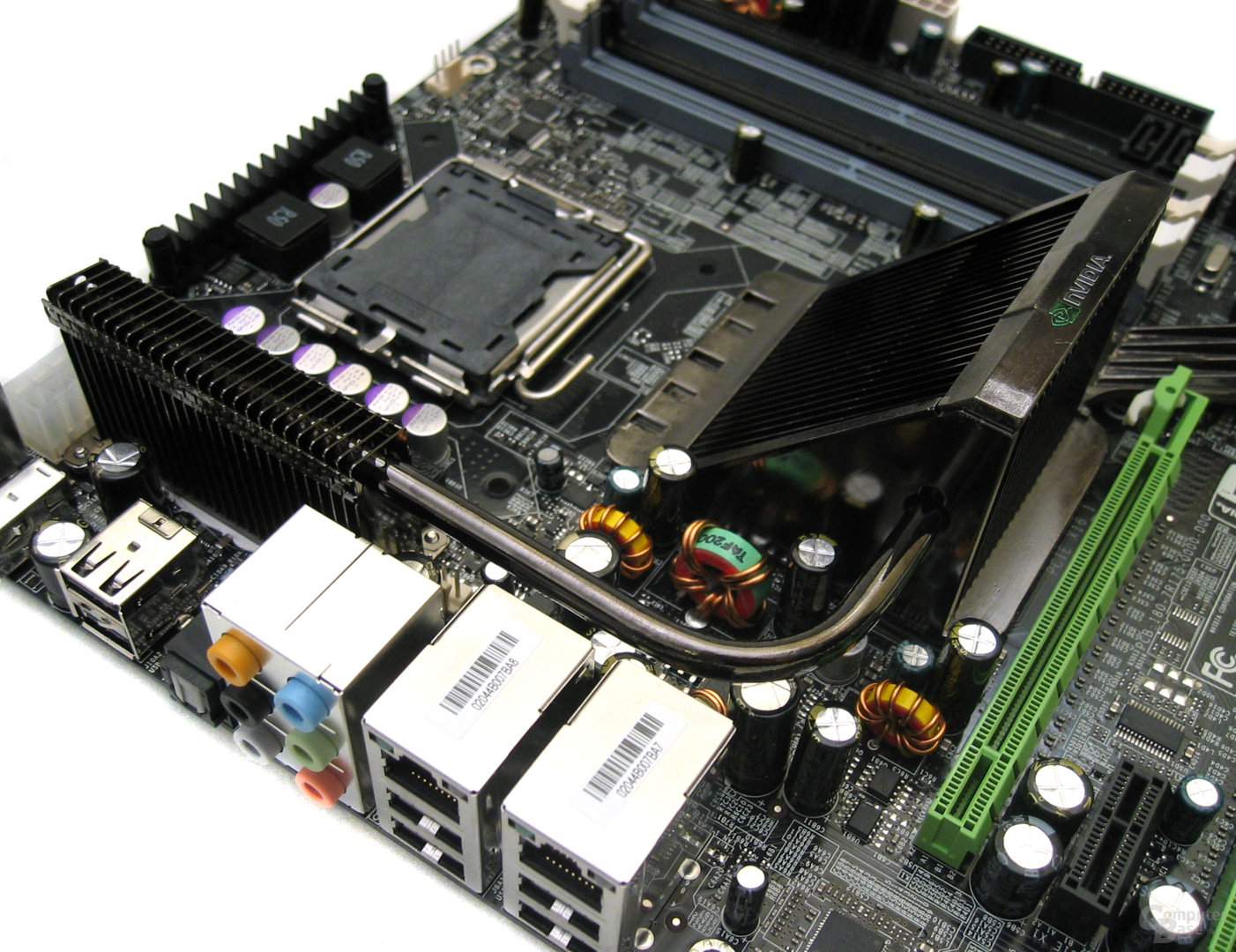
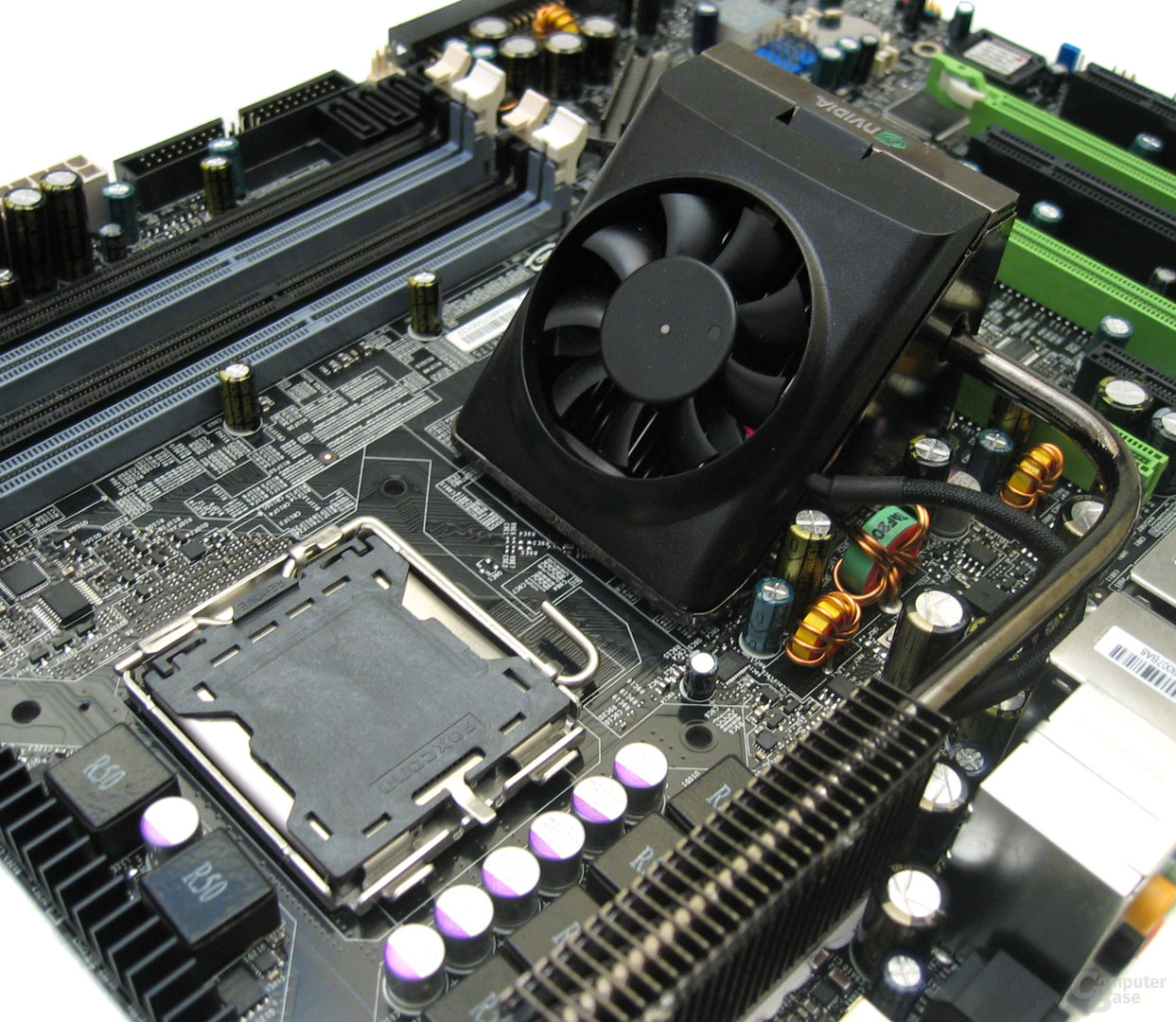
The most important and almost the only new feature of the nForce 780i was SLI a third chip called the nForce 200 that complemented the north and south bridges. The nForce 200 provided 32 PCIe Gen 2 (PCI Express 2.0) lanes, replacing the 16 Gen 1 PCIe lanes previously offered by the Northbridge.
In comparison to the cheaper nForce 750i SLI, the high-end chipset offered an additional 16 PCIe lanes according to standard 1.1 via the south bridge, resulting in a total of 48 PCIe lanes.
The second, less significant change from the previous generation was support for Nvidia's Enthusiast System Architecture (ESA), which should allow certified components to communicate – for example, a water cooling system should be able to read the GPU temperature in order to adjust its pump and fan speeds.

Image 1 of 9








The performance was sometimes up and sometimes down
In the benchmarks, the XFX nForce 780i SLI under test generally cut a good figure. Differences to Intel's X38 chipset were particularly evident in the memory tests. While Intel was way ahead in Raid 0 mode, there was a tie in Raid 1 and in Raid 5 Nvidia took the lead. The situation was similar in 3DMark Vantage: Intel was ahead in the memory tests and Nvidia in the gaming tests.
Charts
- 3DMark06 – Total
- 3DMark06 – CPU
- 3DMark06 – SM2
- 3DMark06 – SM3
- FireWire – Average
- FireWire – CPU load
- FireWire – Burst
- Vantage – PCMark Suite
- Vantage – Memories Suite
- Vantage – Games Suite
- USB – average
- USB – CPU load
- USB – Burst
- RAID 5 – Write Average
- RAID 5 – Read Average
- RAID 5 – CPU Load
- RAID 5 – Burst
- RAID 1 – Write Average
- RAID 1 – Read Average
- RAID 1 – CPU load
- RAID 1 – Burst< /li>
- RAID 0 – Write Average
- RAID 0 – Read Average
- RAID 0 – CPU Load
- RAID 0 – Burst
3DMark06 – Overall
-
- Asus P5E3 Deluxe10.288
- XFX nForce 780i SLI10.226
Unit: Score 3DMark06 – CPU
-
- Asus P5E3 Deluxe4.485
- XFX nForce 780i SLI4.390
Unit: Points 3DMark06 – SM2
-
- XFX nForce 780i SLI3.877
- Asus P5E3 Deluxe3.859< /li>
Unit: Points 3DMark06 – SM3
-
- Asus P5E3 Deluxe4.254
- XFX nForce 780i SLI4.206
Unit: Points FireWire – Average
-
- XFX nForce 780i SLI41.4
- Asus P5E3 Deluxe39.9
Unit: megabytes per second (MB /s) FireWire – CPU load
-
- XFX nForce 780i SLI2
- Asus P5E3 Deluxe1
Unit: percent FireWire – Burst
-
- XFX nForce 780i SLI42,9
- Asus P5E3 Deluxe41,3
Unit: Megabytes per second (MB/s) Vantage – PCMark Suite
-
- Asus P5E3 Deluxe5.665
- XFX nForce 780i SLI5.359
Unit: Points Vantage – Memories Suite
-
- Asus P5E3 Deluxe5.060
- XFX nForce 780i SLI4.011
Unit: Points Vantage – Games Suite
-
- XFX nForce 780i SLI4.649
- Asus P5E3 Deluxe4.195
Unit: Points USB – Average
-
-
- XFX nForce 780i SLI35.7
- Asus P5E3 Deluxe35.0
Unit: Megabytes per second (MB/s) USB – CPU Load
-
- XFX nForce 780i SLI4
- Asus P5E3 Deluxe3
Unit: Percent USB Burst
-
- Asus P5E3 Deluxe37.8
- XFX nForce 780i SLI37.5
Unit: Megabytes per second (MB/s) RAID 5 – Write Average
-
- XFX nForce 780i SLI19,5< /li>
- Asus P5E3 Deluxe15.6
Unit: Megabytes per second (MB/s) RAID 5 – Read Average
-
- XFX nForce 780i SLI53,8
- Asus P5E3 Deluxe36,6
Unit: Megabytes per second (MB/s) RAID 5 – CPU load
-
- XFX nForce 780i SLI4
- Asus P5E3 Deluxe2
-
- XFX nForce 780i SLI157.7
- Asus P5E3 Deluxe100.3
Unit: megabytes per second ( MB/s) RAID 1 – Write Average
-
- < li class="chart__row">XFX nForce 780i SLI48.7
- Asus P5E3 Deluxe48.0
Unit: Megabytes per second (MB/s) RAID 1 – Reading Average
-
- Asus P5E3 Deluxe49.5
- XFX nForce 780i SLI39.4
Unit: Megabytes per second (MB/s) RAID 1 CPU Load
-
- XFX nForce 780i SLI2
- Asus P5E3 Deluxe1
unit : Percent RAID 1 – Burst
-
- XFX nForce 780i SLI41.5
- Asus P5E3 Deluxe40.1
Unit: Megabytes per second (MB/s) RAID 0 – Write Average
-
- Asus P5E3 Deluxe97,6135,6 with 3 HDDs
- XFX nForce 780i SLI85,5108,9 with 3 HDDs
Unit: Megabytes per second (MB/s) RAID 0 – Read Average
-
- Asus P5E3 Deluxe97,8129,7 with 3 HDDs
- XFX nForce 780i SLI69,686,8 with 3 HDDs
Unit: Megabytes per second (MB/s) RAID 0 – CPU load
-
- XFX nForce 780i SLI98 with 3 HDDs
- Asus P5E3 Deluxe47 with 3 HDDs
Unit: Percent RAID 0 – Burst
-
- Asus P5E3 Deluxe288,7351,4 with 3 HDDs
- XFX nForce 780i SLI123,9173,9 with 3 HDDs
Unit: megabytes per second (MB/s)
Conclusion
The nForce 780i SLI wasn't really convincing at the end of the test. Nvidia had introduced too little innovation, the performance was fluctuating and the price for the corresponding mainboards was high at 200 euros and up. Both Intel and AMD already offered PCIe 2.0 natively in their boards without the corresponding additional chips. The nForce 780i was primarily a do-it-yourself solution for those who wanted to combine three graphics cards in one system.
And today?
The SLI concept should not prevail. While Nvidia combined up to four graphics cards in one system at the peak of the technology, it is hardly used today. With the GeForce RTX 4000 series (test), support for multi-GPU systems in the consumer sector has officially ended. Nvidia hasn't developed motherboard chipsets since the nForce 980a in 2009.
In the category “In the test 15 years ago”, the editors have been taking a look at the test archive every Saturday since July 2017. The last 20 articles that appeared in this series are listed below:
- Intel's Core 2 Extreme on 45nm steroids
- The GeForce 8800 GTS 512 with the secret G92 full expansion
- Scythe Ninja Cu, the limited copper block
- Allow, Radeon HD 3850, the 135-euro miracle weapon
- With the Zalman VF-1000 against Arctic Coolings S1
- ATi made a comeback with the Radeon HD 3870
- Nvidia's GeForce 8800 GT was almost perfect
- Intel's 45 nm process made Penryn fast and economical
- The thermal right IFX-14 two towers were not enough
- The best Radeon HD 2600 XT were blue
- Thermalright's Ultra-120 Extreme was the reference
- 249 euros was too much for the Radeon HD 2600 XT X2
- Teufel's elegant 2.1 system with excellent sound
- Arctic Cooling's Accelero S1 was colder than the competition
- Zalman wanted to reinvent itself and failed
- Cooler Masters Cosmos at an astronomical price
- The best multimedia keyboard came from Microsoft
- Sparkle's Caliber GeForce 8600 GT performed far outside the norm
- Xigmatek was on the road to success with the HDT-S1283
- Movie playback on ATi versus Nvidia GPUs
Even more Content of this kind and many other reports and anecdotes can be found in the retro corner e in the ComputerBase forum.