During World War II, President Roosevelt's Lend-Lease Act helped defeat the Nazis. Now it could be relaunched for the quick, unbureaucratic delivery of weapons and aid to Ukraine.

Josef Stalin, Franklin D .Roosevelt and Winston Churchill at the Tehran Conference November 1943
It's December 17, 1940 when Franklin D. Roosevelt reminds the United States of the importance of having a garden hose in an emergency. Five weeks earlier, the German Luftwaffe had leveled the English city of Coventry, Britain's main ally France had been defeated by the Nazis months earlier, and British Prime Minister Winston Churchill wrote a desperate letter to the US President at the beginning of December, with the flaming Appeal to supply destroyers against the German submarines.
Roosevelt therefore appeared before the press a good year after the start of the Second World War and explained to his compatriots in advance the lend-lease law that he was about to sign on March 11, 1941: “If my neighbor's house is on fire, then it goes without saying that I will borrow my garden hose and not say to him, 'Mr Neighbor, the hose cost $15, you have to pay me the $15 now.' I don't want the $15 – I want my garden hose back once you put out the fire.”
The USA lends its garden hose, under the name “Lend-Lease Act”, to France and China, but above all to Great Britain and later to the Soviet Union in the fight against the Axis powers Germany, Italy and Japan. Heavy weapons, ammunition, vehicles, gasoline, airplanes and food such as canned meat with a total value of almost 50 billion US dollars are leased with the option of paying later – until the program expires in August 1945, shortly after the end of World War II.
Crucial aid to Britain and the Soviet Union
“Lend-Lease was absolutely essential to the ability of Britain and the Soviet Union to wage war. In early 1941, just before the Lend-Lease Act was passed, Churchill informed the British monarch King George VI that without it Britain could not would be able to go ahead and win the war,” says Charlie Laderman.
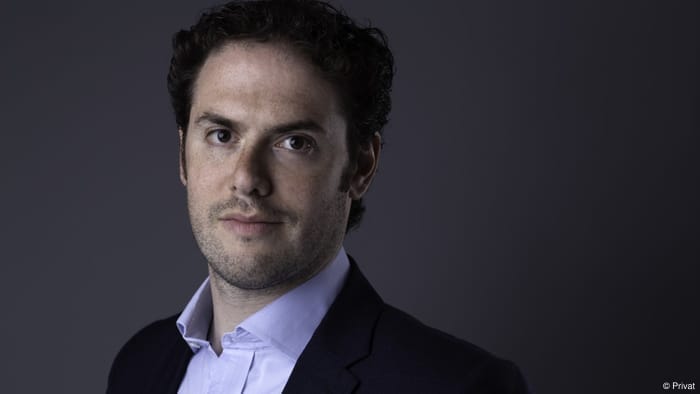
“Roosevelt could say with Lend-Lease that Americans don't have to go to war” – Charlie Laderman
Laderman is a historian and lecturer in international history at King's College in London. In his book “Five Days in December”, together with the Irish historian Brendan Simms, he has reconstructed in minute detail how late 1941, after the Japanese attack on Pearl Harbor and the German declaration of war on the USA marked the beginning of the defeat of the Axis powers. The lend-lease law was decisive for the war, especially the support for the Soviet Union.
“It gave Soviet forces the mobility they needed for their advances in 1943-45. The Soviets denied this after the war, but even Vladimir Putin later admitted it,” says Laderman. The Red Army advanced with the support of tens of thousands of US automaker Studebaker trucks. Many historians are also certain that the turning point in the war in Stalingrad in 1942 would not have taken place without the lend-lease law.
Watch video 42:31
The Red Army – Great Patriotic War – Part 1
Soviet leader Nikita Khrushchev recounted that Stalin once told him: “If the United States had not helped us, we would not have won the war. If we had had to fight Nazi Germany one-on-one, we would not have withstood German pressure and we would have lost the war.” At the Allied Conference in Tehran at the end of 1943, Stalin, who is silent about deliveries at home, even raises his glass to the US automobile and oil industries.
Lend and Lease Act passes US Senate
Almost eight decades later, two senators remember the lend-lease law that helped bring the Nazis to their knees during World War II: John Cornyn, who has represented Texas in the Senate for 20 years, and his Democratic colleague Ben Cardin of Maryland will introduce the Ukraine Democracy Defense Lend-Lease Act as a bill into the House on April 6, which unanimously passes it. If the initiative also passes the House of Representatives, the United States will be able to deliver arms and other supplies to Ukraine faster and with less bureaucracy for two years.

“We have a responsibility to help Ukraine defend its sovereignty and democracy” – John Cornyn
“If we believe that the US supports freedom and democracy, we must arm Ukraine with the weapons necessary to protect its citizens. I urge the House of Representatives to pass this legislation as soon as possible to fulfill our promises.” to our allies,” says Cornyn. US military aid since the start of the war has already reached US$3.7 billion.
Does history repeat itself?
So, like it was 80 years ago, can lend-lease be the game-changer the US is hoping for? And how does the situation today compare to that of the past? “It remains unclear whether defense aid will be enough to defeat Putin,” says historian Laderman. In any case, the world is different today, and Putin is not Hitler. “But in combating Putin's war of aggression, Western statesmen face the same dilemma as their predecessors in 1941. For Hitler, the lend-lease law was tantamount to a declaration of war by the USA, even without a formal declaration.”
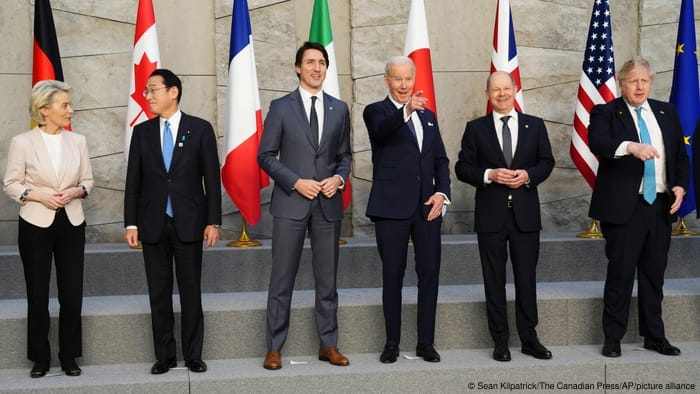
How to react to Putin? The NATO special summit on March 24, 2022 in Brussels
During World War II, the United States became the weapons arsenal of the Allies through the Lend-Lease Act Ukraine supplies: howitzers, Russian-made helicopters, armored personnel carriers, drones. The West, according to Laderman, must now watch closely how Russia reacts to a lend-lease law 2.0: “Putin already saw himself caught in a conflict with the West, for him it makes no difference whether there is indirect or direct support for Ukraine exists. So it is unlikely that the passage of the lend-lease agreement will be a turning point for Putin. On the other hand, this conflict also shows that, like Hitler, Putin is capable of disastrous games and miscalculations.”