Gidon Lev survived the Holocaust as a child, today he addresses the younger generation on TikTok. More than 80 years after the end of the war, the commemoration of the Holocaust and the debate about how to deal with it are changing.

Gidon Lev wants to explain about the Holocaust on TikTok
Whether at home, in the park or while traveling: Gidon Lev captures these moments on TikTok. The special thing: He survived the Holocaust as a child and talks about his experiences and his life in the short videos. The 87-year-old, who is also known as “TikTok Grandpa” by his followers, has obviously struck a chord – especially among many young users. “I think despite the great horror, the great suffering, the great pain and the extreme cruelty, there are also good things in life and good people. Sometimes you have to look for them and find them, but they exist,” says Lev and judges thus addressing the younger generation directly. “And you, the young people, can make the world a better place. You have life ahead of you and you can make it better.”
-
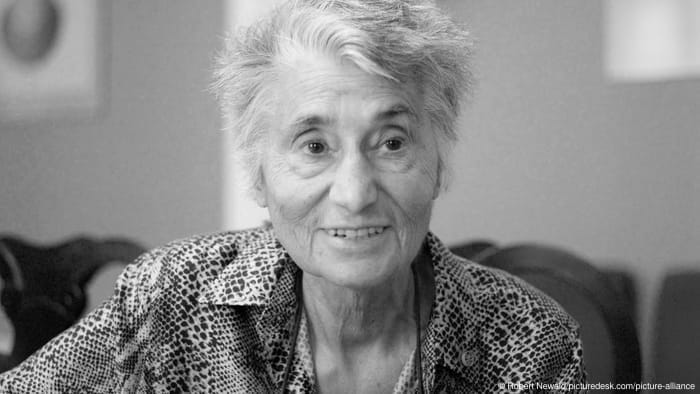 Holocaust survivors: Working against forgetting
Ruth Klüger (1931-2020)
She only broke the silence at the age of 60 and wrote down her memories: “Living on – a youth” (1992). The poems with which Ruth Klüger survived the time in the concentration camp are also collected in it. Klüger was one of the few Holocaust survivors who spoke about it. We introduce you to other eyewitnesses who, like you, keep or kept the memory alive.
-
 Holocaust survivors: working against forgetting
Leslie Schwartz (1930-2020)
1944. The Wehrmacht occupies Hungary. Leslie Schwartz and his family are deported to Auschwitz-Birkenau. From there he had to go to the Birkenau labor camp and finally to the Dachau concentration camp. In “Through the Hell of Auschwitz and Dachau. A Boy Fights to Survive” (2007) he tells of his experiences. Leslie Schwartz gave many readings and lectures to inform posterity.
-
 Holocaust survivors: working against forgetting
Esther Bejarano (1924-2021)
“I have to be in this orchestra, otherwise I'm done for,” the then 19-year-old said to herself. She played the accordion in the Auschwitz girls' orchestra – although she had never held the instrument in her hands. It is her salvation. Later Bejarano was on stage and sang for tolerance and against racism. And she visited school classes to tell about her past.
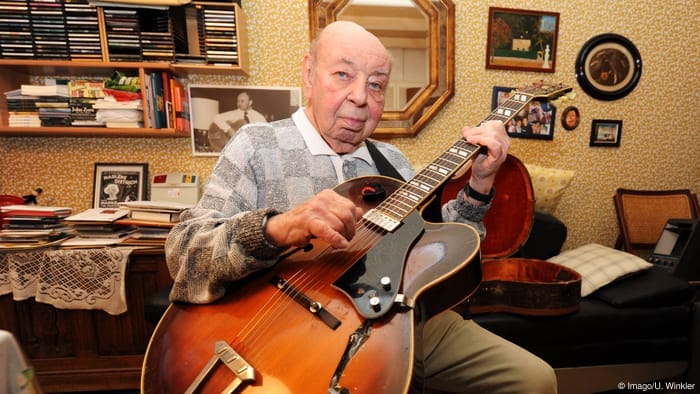 Holocaust survivors: working against forgetting
Coco Schumann (1924-2018)
Jazz and swing – that was his music. But the National Socialists considered them “un-German”, and Schumann's mother was Jewish. In 1943 Coco Schumann was deported to the Theresienstadt ghetto and a year later to Auschwitz-Birkenau. Until the new millennium, the musician did not want to talk about the camp period. Then he understood: “If not him, who should tell the people what happened.”
-
 Holocaust survivors: fighting against forgetting
The sisters Renate Lasker-Harpprecht (1924-2021) and Anita Lasker-Wallfisch (*1925)
Her parents were deported and murdered in 1942, the eldest sister was able to escape, Renate (left) and Anita Lasker ended up first in Auschwitz and then in Bergen-Belsen. But they survived – not least because Anita enjoyed privileges as a cellist in the Auschwitz girls' orchestra. Even at an advanced age, they reported to the German public about the Holocaust. Renate died in 2021.
-
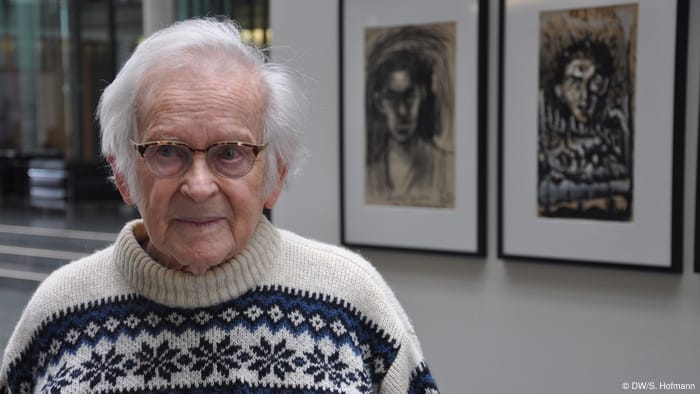 Holocaust survivors: working against oblivion < h2>Yehuda Bacon (*1929)
In Theresienstadt, the then 13-year-old Yehuda Bacon met the artist Peter Kien, who had managed to set up a drawing room there. It is the beginning of Bacon's artistic career. After the liberation in 1945, he first painted portraits of fellow prisoners, later also abstracts. As a survivor, he feels a responsibility to teach future generations through his story.
-
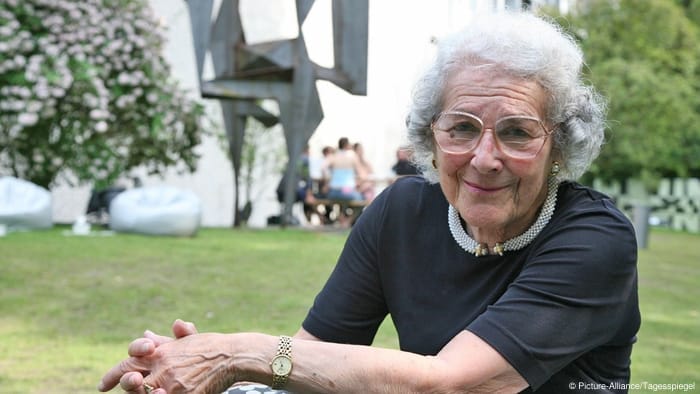 Holocaust survivors: working against forgetting
Judith Kerr (1923-2019)
The Kerr family had to flee Germany in 1933. First to Switzerland, to France and finally to London. In “When Hitler Stole the Pink Rabbit” (1971) Judith Kerr dealt with the fate of her Jewish family as an émigré. Two more novels followed. In 1974 Kerr received the German Youth Literature Prize for “When Hitler Stole the Pink Rabbit”. She died in London in 2019.
-
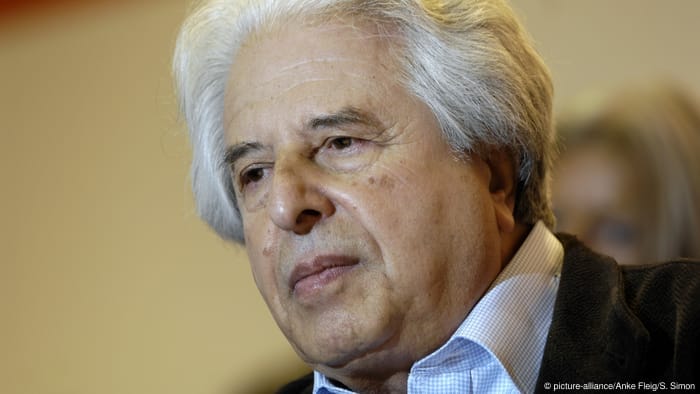 Holocaust survivors: Working against the Forget
Saul Friedländer (*1932)
“Where memory leads. My life” comes from professor emeritus from Los Angeles and Tel Aviv, Saul Friedländer. A continuation of his memoirs, which make it clear: Friedländer's life remains that of an uprooted man. The historian has written numerous relevant works on Jewish history and the Shoah, in which he focuses more on the victims.
-
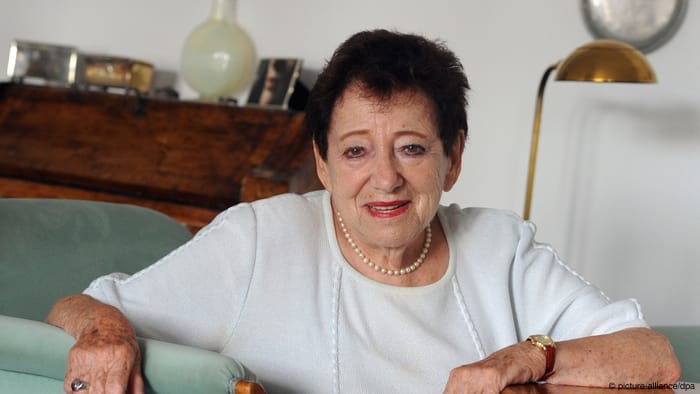 Holocaust survivors: fighting against forgetting
Inge Deutschkron (1922-2022)
In January 1943, Inge Deutschkron and her mother went into hiding in Berlin, hiding with non-Jewish friends. That was the only way they survived the Holocaust. In her autobiography “I wore the yellow star” (1978), the German-Israeli author tells of this time. With her literature and school visits, Deutschkron made an important contribution to preserving the memory of the Nazi atrocities.
-
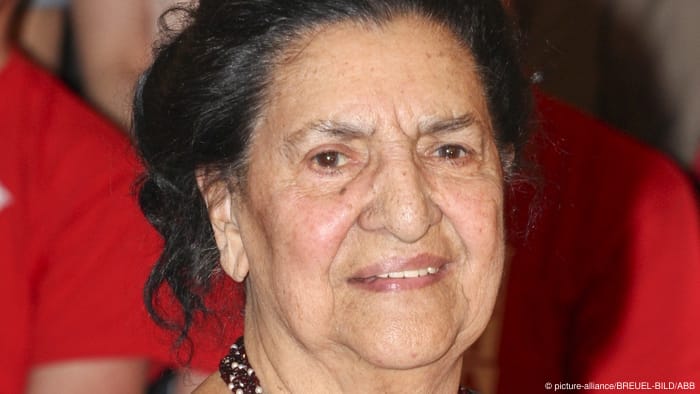 Holocaust survivors: Working against oblivion
Philomena Franz (*1922)
A year before the end of the war, Philomena Franz was deported to Auschwitz-Birkenau and from there to Ravensbrück concentration camp – because she is a Sinti. She survived to tell posterity about her experiences. Her autobiography “Between Love and Hatred” was published in 1985. She also appeared in the media and in schools so that the approximately 500,000 Sinti and Roma murdered are not forgotten.
Lev was born in 1935 in what was then Karlsbad, now Karlovy Vary in the Czech Republic. At the end of 1941, the then six-year-old was deported with his parents to the Theresienstadt ghetto and concentration camp near Prague. His parents had to do forced labor there: the father in a mine, his mother had to process the mica rock, a raw material, that was mined there.
“If the mother was allowed to stay, then the children stayed too”
“The Germans did a 'sample' every now and then to check how much the women had done. I assume that they had previously determined what was considered sufficient,” says Lev. “Those who agreed were allowed to stay. And if the mother was allowed to stay, then her children stayed too. It's only thanks to my mother, who worked hard until the end, that I'm here today,” says Lev.
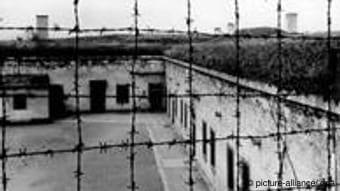
Building of the concentration camp in Theresienstadt, Czech Republic, set up by the SS in 1941
Lev never saw his father again. The Nazis had deported him from Theresienstadt to the Auschwitz concentration camp and murdered him. 26 other family members also died. In a TikTok video, Lev shows a pendant his father handed his mother from the wagon that took him to Auschwitz. After the war and a brief return to the former homeland, Lev went to the United States with his mother, then to Canada. In 1959 he finally emigrated to Israel.
Lev says he's remained an optimist despite everything and doesn't want to define himself just as a survivor of the Holocaust, he's seen too much for that. But it bothers him that there are still people today who deny the Holocaust and spread anti-Semitism – including on social networks. “I know it's there. And it doesn't take much for the hate and cruelty to break through. We've seen that.”
Against anti-Semitism and denial
During the coronavirus pandemic, for example, in his TikTok videos he called on other users not to compare measures against the pandemic with Nazi tactics and sharply criticized opponents of vaccination who had attached a yellow Star of David to themselves. At that time, every Jewish person in the so-called Third Reich had to wear the “Jewish star” ordered by the Nazis.

Mit such a “Judenstern” people of Jewish faith were publicly discriminated against during the Nazi era
“I was so angry about it. We wore masks to protect ourselves and others from getting sick or even dying,” Lev says in an interview with DW. “The star was the exact opposite: it was about isolating Jews from the rest of the population, shaming them, humiliating them, it wasn't there to protect them, but to demonize them.”
< h2>“Amazing lack of knowledge about the Holocaust”
The fact that some of his videos get millions of clicks and likes surprised him – as did his partner Julie Gray, who produces the videos with him. Actually, the TikToks were intended to push the sale of the jointly written book “The True Adventures of Gidon Lev”. But it has long since become more. “For me, the importance of using TikTok lies in the amazing lack of knowledge about the Holocaust among young people,” says Gray. “TikTok is a medium that young people like, with music, memes and hashtags, but at the same time you can use it to convey something.”

Julie Gray and Gidon Lev producing TikTok in their home in Ramat Gan
Of course you can't explain the Holocaust in 30 seconds. “But we can use it to arouse curiosity, so that people say: I want to know more about that. And we have to ask ourselves the questions: How do we convey the Holocaust? Does it still reach young people today?”
The generation of Holocaust survivors is lost
These questions and developments are followed by Dr. Noa Mkayton, Director of the Overseas Education and Training Department at the International School for Holocaust Studies at Yad Vashem, for many years. Remembrance culture is never static and is constantly changing, she says. More than 80 years after the end of the Second World War, another factor is added: the generation of Holocaust survivors, the contemporary witnesses, will soon be gone.

At the age of 99, Margot Friedländer is one of the last living witnesses of the Holocaust in Germany
Personal encounters, which are important in order to bring the experience closer to young people in particular, are becoming fewer and fewer. Living in Israel, for example around 165,000 people who are recognized by the state as Holocaust survivors, according to figures published by Israel's Central Statistics Office for this year's Holocaust Remembrance Day.
How will we remember it in the future?
< p>“It's a huge repercussion because it takes away a very personal connection to the subject, which is, 'This is my grandma' or 'This is my grandfather,'” says Mkayton. New forms and ways of expressing memory are also added. “At the moment the question is: How can I express myself and what medium do I use? And if TikTok is used, for example, then my expression is only a minute long and no longer a long, introverted, balanced inner view. The language changes easy,” the historian told DW. “We as educators, we can find what we want, but we have to deal with it. It's just there.”
The debate about the future of memory is not new either. “Twenty years ago, when teachers were walking their ninth graders through memorial sites, those teachers on the bus would panic because the students wouldn't take out their gum or put their Walkman down,” Mkayton recalls. “The respect that is demanded is a question of pedagogy: How do I convey the topic to you in such a way that you understand that it also has something to do with you?”
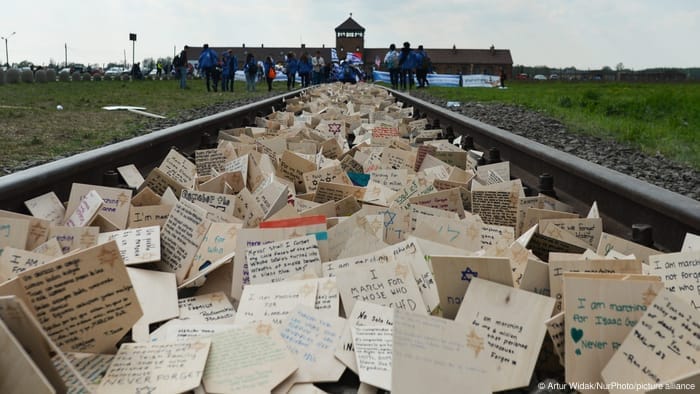
More than 10,000 young people, both Jewish and non-Jewish, wrote down their thoughts on the Holocaust for the annual “March of the Living” in the former Auschwitz death camp (archive photo from March 2, 2017). . May 2019)
Gidon Lev has used social media to spread his message to as many young people as possible. And that is very clear. “Sometimes I think about how cruel and inhuman the Germans were towards other people. And I cannot understand that the same people, the same nation that gave us Mozart, Bach, Handel and Brahms did what they did did. How is that possible? But it turns out it's possible,” Lev says thoughtfully. “And I can only hope that there are enough young people who know what is right and fight to do it better.”